Tuesday, February 19, 2019

Tall Pines Wildlife Management Area


Tall Pines Lake island
 
The South Carolina Department of Natural Resources on Friday announced that 1,757 acres in northern Greenville County are now open to the public as Tall Pines Wildlife Management Area (WMA). $3 million of the total of $4 million needed to preserve the site came from the South Carolina Conservation Bank, with the remainder covered by the SC DNR Heritage Land Trust Fund and timber management funds.


The parking area for Tall Pines WMA is located some 8 miles north of Travelers Rest at 552 Moody Bridge Road, and the gravel lot looks out over Tall Pines Lake, one of the ponds on the property. Braided footpaths along the shoreline are evidence that this is a popular spot for angling; fishing website hookandbullet reports perch, largemouth bass, rainbow trout, crappie and bullhead. In the center of the lake is a small island with a block structure; the small tower is certainly unique, though my research didn’t reveal a purpose other than aesthetic.

Tall Pines Wildlife Management Area parking

For a short ¾ mile loop hike, follow the old road behind the red gate from the corner of the parking area. It climbs a little in elevation, with a view of Table Rock to the west. Once you reach a second red gate at Moody Bridge Road, make a sharp turn and follow the old road south. You’ll hear the frogs before you see the lake, the north end being quite marshy. The road brings you to the point where two lakes connect, and from here it’s just a matter of following the narrow footpaths along the shoreline to return to the parking lot.

View of Table Rock from Tall Pines WMA

In addition to the lakes, Tall Pines also has wetlands, about 600ft of elevation change to the top of Little Mountain, and a mile of frontage on the South Saluda River. From the parking area, cross Moody Bridge Road and follow the old road west to access the river. You’ll see the ruins of a structure down on the creek, and the woods have quite a bit of evidence of past agricultural activity: wire fencing rolls, old machinery, miscellaneous debris. The road emerges to one of several meadows before taking a turn south to follow a second creek upstream. On our recent visit this area was completely flooded (and evidence of beavers abounded) – plan on getting your feet wet if you are going to hike the system of old roads that crisscross the western half of Tall Pines. Or, you can skirt the edge of the field to reach the Saluda.

South Saluda river frontage on Tall Pines WMA

The South Saluda runs parallel to Scenic Highway 11 for some 3 miles, then turns south to tumble through the Class III-IV/V rapids at Blythe Shoals. There is a Naturaland Trust River Access and Parking Area at 25 S. Blythe Shoals Road that serves this stretch of the river, although after passing through the shoals and under Talley Bridge Road the waters calm considerably. The one mile of South Saluda fronting Tall Pines runs quick and clear, high banks complicating access. In addition to the trout lilies and other native species there are plenty of privet, multiflora rose and other invasives, further tangling the banks. The tributary from Tall Pines Lakes empties into the river between the two fields, and the waters continue south, eventually passing west of Greenville and through Piedmont on their way to Lake Murray.

Looking down from Moody Bridge Rd. to creek connecting Tall Pines Lakes and South Saluda

The SC DNR has expressed hope that Twin Pines will become a destination for anglers and paddlers, as well as offering hiking, birdwatching and hunting opportunities; the WMA provides habitat for fish, deer, turkey, quail and small game. There is no formal boat launch at Twin Pines, but the road allows for easy access with canoe and kayak. And while there is no official trail system as of now, the acreage can be explored utilizing the pre-existing system of old roads. Download a map of Tall Pines Wildlife Management Area here: http://www.dnr.sc.gov/news/2019/feb/TallPinesWMAmap2019.pdf.


Tuesday, February 12, 2019

Finding gold in the Carolinas

All three boys have rock collections. At first, it was piles from pockets turned inside-out after a hike, later secret stashes in their rooms discovered during spring cleaning. Recently we purchased several compartmentalized fishing lure containers, and the boys have taken to labeling their finds; if they can’t identify the stone, we’ll at least add other information such as where it was found.


Our area is rich in mica, the glossy sheets often found in combination with quartz crystals, as good as treasure when found on a hike. What started as research into rocks, minerals and the geology of the region has evolved into more; in addition to the rock collections, the boys also enjoy ‘panning for gold’. First, a book we found at the local library (How to Get Rich in the California Gold Rush: An Adventurer's Guide to the Fabulous Riches Discovered in 1848), later, a gold panning kit that allowed Lauris to become a pyrite prospector. However interesting working with a kit can be, the boys prefer to ‘pan’ creekbeds, looking for gold but more realistically mica, quartz and other treasure. They’ve even traded fossils at the Minneapolis Science Museum, and get just as excited about cracking geodes as trading sports cards with their friends.

A friend of mine out in Colorado has started a YouTube channel chronicling his adventures in the mountains. The episodes play out like a list of ‘most exciting adventures ever’ for the boys: Colorado River gold dredging, arrowhead hunting, old mine exploring, and finding gold in a frozen river (see below). If your kids enjoy rocks & minerals, they will love watching these videos! And while the kids delight in the adventure and the thrills, I appreciate the spectacular backdrop of the Colorado Rockies. Let me know what you think...


Recently things kicked up a notch when Santa sent Lauris a bag of Leadville paydirt for Christmas. (Paydirt is literally sand/rocks that can be panned to reveal gold flakes.) We quickly discovered that panning for gold is much easier when there is real gold in the mix; mica and quartz don’t exhibit the same tendencies to separate out during the panning process. I watched open-mouthed as Lauris picked out gold flakes from his pan and proudly placed them in a display case, now one of the most prized pieces of his collection. Colorado-gold-camp on eBay offers two different sizes of paydirt, a smaller one that is perfect for kids, and a larger option that gives everyone a turn panning. And if you're on Instagram, you can follow their adventures there: Colorado Gold Camp.

Panning an Upstate creek

This gold fever has prompted me to dig around a bit to learn more about the gold mines and prospecting and panning areas of South Carolina. There is a gold belt that extends from Central Alabama to Northern Virginia, and there is a cluster of gold mines and prospecting & panning sites near Rock Hill, York and Gaffney. The famous Haile Gold Mine is near Kershaw in Lancaster County, and Reed Gold Mine in NC is the site of the first documented gold find in the US. One source said that South Carolina's largest gold producing counties include Cherokee, Greenville, Oconee, Pickens, Spartanburg and Union, and in recent decades, South Carolina has been a major producer among the Appalachian states. You can bet we’ll be doing some more research on finding and panning for gold, and that come warmer temperatures the boys will have their prospecting equipment with on hikes!

Monday, February 4, 2019

Beech Bottom Falls (aka Pinnacle Falls)


Not only has the SC DNR rerouted the trail to Pinnacle Falls, they’ve renamed the waterfall Beech Bottom Falls! An improved parking lot awaits hikers on F Van Clayton Memorial Highway, located 1.5 miles north from the intersection of 178 (Moorefield Memorial Highway) and F Van Clayton in Rocky Bottom SC. The Chimneytop Gap trailhead also offers access to the Foothills Trail; it is 2.1 miles east to Sassafras Mountain and 2.1 miles to Laurel Valley. The Beech Bottom Trail heads west on the old roadbed 400 ft north from the parking lot; if you miss the little shortcut trail, you just go north to the gravel road with the red gate and head west.


After ½ mile, the old roadbed crosses Abner Creek. Hikers cross on a beautiful new footbridge, then immediately turn left onto another old roadbed – follow the signs to Beech Bottom Falls. You’ll recross Abner Creek on a second footbridge (a twin to the first), then start descending to the observation deck. The view of the falls is partially obscured by trees; I can imagine that in the summer the foliage blocks most of the falls. The view north across the mountains is also a testament to the destruction caused by the hemlock wooly adelgid; the tops of towering snags are eye level with the platform, with only a few hemlocks remaining to testify to their past dominance of the forest canopy. (Sure didn’t see any beech trees!) From your perch on the southern cliffs of Abner Creek you can see a second observation deck, lower on the cliff; it is accessed from Pinnacle Falls Trail / Moorefield Memorial Highway; do not leave trail or platform in this area, it is dangerous as well as damaging to sensitive plant communities.


A third route to Beech Bottom Falls (a.k.a. Pinnacle Falls) offers closer views of the falls. From the first footbridge crossing Abner Creek, stay on old Abner Creek Road. After rock hopping across Dogwood Creek, an old logging road heads southwest from the log deck. The road/trail is overgrown with brambles, but is pretty easy to follow as it descends along the ridge north of Abner Creek. After ascending a small knob, a trail drops off the side, endless switchbacks dropping almost 300 feet in elevation to the base of the waterfall. The NCwaterfalls.com page offers a great description of this trail.

View from base of falls via Pinnacle Falls on Abner creek trail

Not only is this variant much steeper than Beech Bottom Falls trail, but it is also in worse shape. Carefully constructed stairs and trail (even handrails in places) have been compromised by downed trees, and in multiple places the trail can be difficult to follow. As I mentioned previously, the old road is being reclaimed by blackberries, red maple, ferns and grasses, and lack of signage and blazes could make a visit in the growing season a little more complicated. However, the view of the waterfall from the viewing areas at the base of the falls are much better than from the southern viewing platforms, and if one is willing to make an effort, it is a rewarding hike in the Jocassee Gorges area.

View of falls from Beech Bottom Falls trail viewing platform

The hike to the viewing platform on Beech Bottom Falls Trail, plus circling around to the base of the falls from the north brings the hike total to 3.2 miles and 715ft elevation gain. Beech Bottom Falls Trail is less than 2 miles long, with somewhere around 250ft elevation gain. Both trails could be treacherous in wet conditions, and the rocks at the base of the waterfall should be approached with caution. From the Chimneytop Gap area to the Sassafras Mountain parking lot is an additional 3.2 miles and is definitely worth the drive. The visitor center/observation deck at the summit will be finished this year, and will feature 360˚ views from the highest point in South Carolina!

Map of combined route hiking both trails


Wednesday, January 30, 2019

Yayoi Kusama: Infinity Mirrors in Atlanta


Just one month left to see the Yayoi Kusama: Infinity Mirrors exhibit at the High Museum of Art in Atlanta on its last stop in the US!

Yayoi Kusama: Dots Obsession-Love Transformed Into Dots, 2007

Tickets for the exhibit went on sale in September, selling out in three days. If you didn’t manage to purchase tickets, approximately 100 walk-up tickets are available at the museum daily until February 10th. Walk-up ticket sales begin 1 hour before the Museum opens (10 am Tuesday through Saturday, 12pm on Sunday), but it is advised to get there early as lines form before then.

Yayoi Kusama: Infinity Mirrored Room-Aftermath of Obliteration of Eternity, 2009

If making the trip all the way to Atlanta without a guarantee of getting tickets isn’t an option, you have yet another chance to score tickets to the highly acclaimed exhibit. High Museum reserved the final week of tickets to accommodate possible cancellations due to inclement weather, and these remaining tickets will be released for sale February 5, at 10 am online at high.org. The tickets are for specific time slots from February 11 through 17; walk-up tickets will not be sold during this week.

Yayoi Kusama: Infinity Mirrors at the High Museum of Art, Atlanta

Yayoi Kusama (Japanese, born 1929) has been described as one of the twentieth century’s most influential artists, and the Infinity Mirrors exhibit earning her the title of most-Instagrammed artist of our times. Organized by the Hirshhorn Museum and Sculpture Garden, the exhibit is a showcase of six decades of Kusama’s work, culminating with the Infinity Mirror Rooms, her iconic, kaleidoscopic environments. According to the High Museum website, the exhibition presents six of these rooms as well as sculptures, paintings, works on paper, film excerpts, archival ephemera, and additional large-scale installations that span the early 1950s to the present day.

Yayoi Kusama: Life (Repetitive Vision), 1998

If you do manage to purchase tickets, be prepared to show up early to give yourself time to park and find the museum. There is a queue in the lobby, and visitors with tickets are allowed into the exhibit at the designated time. The Infinity Mirror Rooms have separate queues, allowing visitors in 2, 3 or 4 at a time. Tip: If you don’t particularly care who you enter the room with, you may line up in the ‘singles’ line for certain rooms, which will get you in much faster than the main line.

Yayoi Kusama: Infinity Mirrored Room-The Souls of Millions of Light Years Away, 2013

Some of the rooms feature strobe lights, while others can have a dizzying effect from depth (mis)perception. You only get 20-30 second per room, so take advantage of the moment by experiencing it, instead of trying to snap photos. You can always duck in a second time for a photo or two. One room, All the Eternal Love I Have for the Pumpkins, does not allow photography. Another ‘room’ Love Forever is only for sticking your head in; in all the Infinity Mirror Rooms the viewer becomes a part of the exhibit. The final room, The Obliteration Room, allows guests to place stickers on the surfaces of the room, thereby leaving their own mark on the exhibit.

Yayoi Kusama: The Obliteration Room, 2002-present, installed 2018

If you don’t make it to Atlanta to see the exhibit, next time you’re in Raleigh stop by the North Carolina Museum of Art. Last year the museum added Yayoi Kusama’s “Light of Life" to their permanent collection, the porthole exhibit similar to Love Forever. And make sure to use #infinitekusama when tagging on Instagram…


Note: The High Museum posted a timelapse on their Facebook site of the Obliteration Room - you can see it here.

Monday, December 24, 2018

Baltic Christmas Day 24 - Priecīgus Ziemassvētkus!


Priecīgus Ziemassvētkus! Linksmų Kalėdų! Häid jõule!

This 5th edition of the series comes on the heels of the centennial year for the three Baltic countries, and I hope we’ve captured the celebratory sprit as well as our eternal pride in our heritage over the course of the past month. I’m forever grateful to everyone who has contributed: in the form of posts, photographs, illustrations, interviews and ideas. As to the readers, the friends who commented and translated, and those who put me in contact with bloggers and authors all over the world, a heartfelt thank you as the series would not have been a success without you. A special mention to artist ZILGMA for the uniquely Baltic logo that is the face of the series, and to Roberts and my boys for their patience with me while I worked on the perpetual tasks vital to 24 Days of a Baltic Christmas.

I hope that you’ve enjoyed the series! If you tried one of the recipes, fashioned a craft, perused the calendar and gift guide, or just read your way through the Baltics this month, I hope you’ll leave a review on the Facebook page, as well as bookmark the page for next year. We are always taking suggestions of topics and contributors as well, please get in touch with any questions and comments!

Photo: Katram savu tautastērpu

On this final day of 24 Days of a Baltic Christmas, a look back at all the wonderful contributions we’ve seen this month. We kicked off 24 Days of a Baltic Christmas with a short introduction, then on Day 2 took a look at some of the Estonian, Latvian and Lithuanian Christmas markets taking place across the US, Canada, Australia and Europe.


On Day 3, a 24 Days Baltic Holiday Checklist, full of activities to help fill your days with holiday cheer. On the 4th Day of a Baltic Christmas we welcomed Baltic Imports with a gift guide; from something to bring the hostess of the next holiday party, to gifts for the Balts on your Christmas list, the 2018 24 Days Baltic Gift Guide has it all.


Sauerkraut, 2 ways via LatvianEats

Food blogger Latvian Eats joined us on Day 5 with a seasonal favorite, sauerkraut – not one, but two ways! Then on Day 6 we featured author Sandra from blog VeganSandra with a vegan alternative to the Estonian Christmas dinner favorite, blood sausage.

Vegan blood sausage via VeganSandra

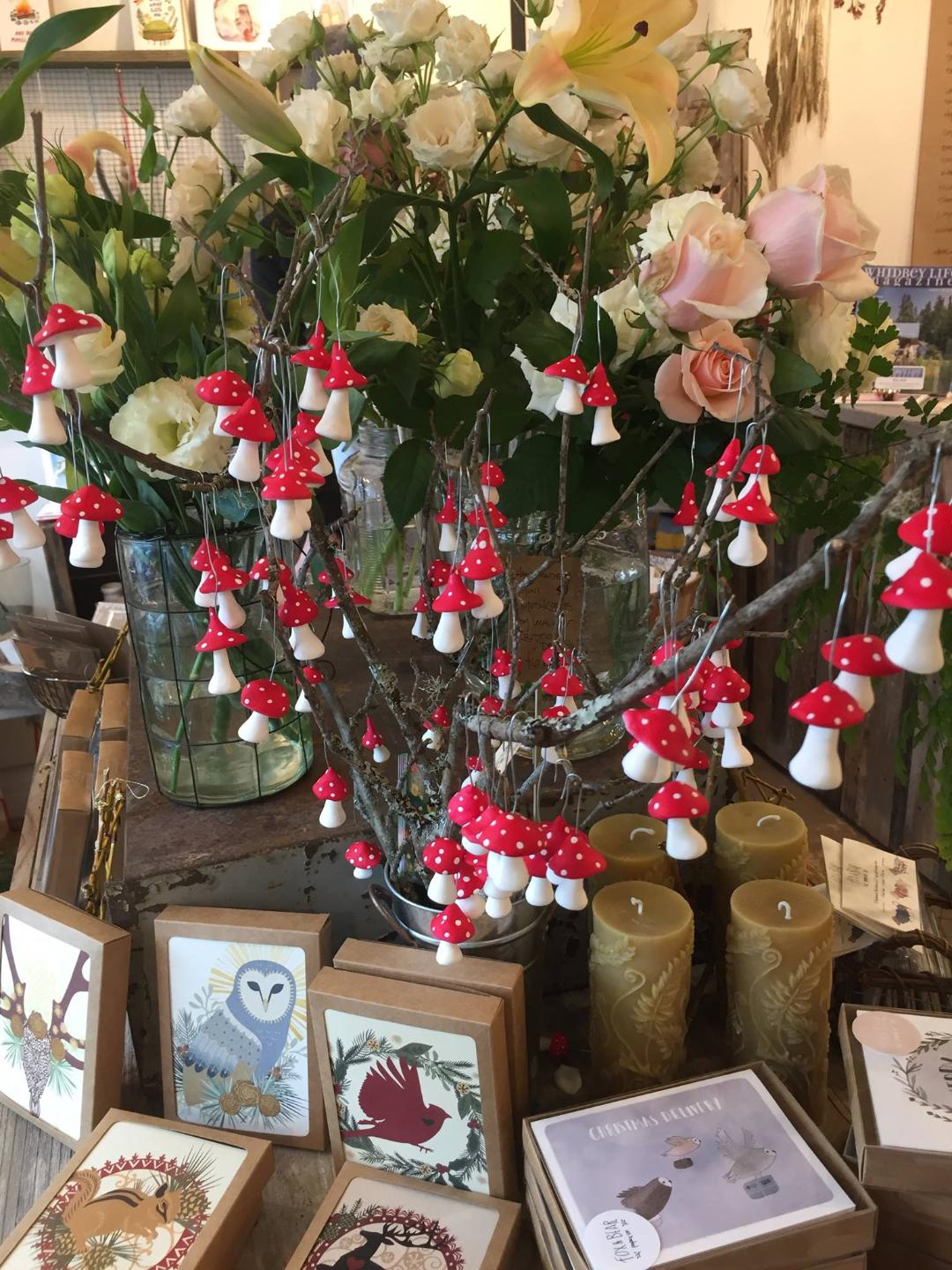
Day 7 was a collection of Lithuanian, Latvian and Estonian blogs, Facebook and Instagram pages, Pinterest boards, and other websites with spectacular Baltic landscapes and plenty of holiday cheer! Then we hopped up to Washington on Day 8 with artist Kristi O and her miniature mushrooms, a product of her creative talents and Estonian heritage.

Kristi O's mushrooms


Day 9 brought a collection of Baltic-inspired crafts. Then the essay “The Infinite Manifestations of Home” on Day 10 from contributor Ērika Veidis, a Latvian living in the United States. 

Ērika Veidis on the Infinite Manifestations of Home
Nine years of Yule dinner in Estonia, via Tulen Loobin Su Katusele Kive

Annika, of the blog Tulen Loobin Su Katusele Kive joined us on Day 11 with a photographic journey through nine years of Estonian Yule dinners. Then on Day 12 we welcomed Margaret of the blog Balt in the box room with her fish tale of the pitfalls of buying a carp for Christmas.

The pitfalls of buying a carp for Christmas, via Balt in a box room

On Day 13 of the series we welcomed Baņuta Rubess with her article Dec. 21: Lighten Up! concerning the Latvian tradition of pulling the log on winter solstice. Then on Day 14, An ode to verivorstid from another new contributor, Andres Simonson, courtesy of Estonian World.

An ode to verivortid!


On Day 15 we made tin can lanterns to celebrate the arrival of the Peace Light, the live flame that travels the world sharing its message of peace and hope. Then we discussed the similarities and differences of the Lithuanian and Latvian Christmas dinners on Day 16, comparing the food traditions of Kūčios and Ziemassvētki. On Day 17 we welcomed back contributor Kristīna, as she deciphered the mystery of candied cranberries; you can find her recipe for dzērveņu dzirksteles (cranberry sparks) here.

Kristīnas cranberry sparks

We journeyed into the world of Baltic libations with a miniseries during the third week of the series. Beginning with Lithuanian krupnikas on Day 18, then black currant liqueur on Day 19, and finally Tāle's Sunshine Coast Black Balsam recipe on Day 20!

Tāles Sunshine Coast Black Balsam
source: Wikipedia commons

On Day 21 we celebrated the winter solstice with a collection of resources concerning the traditions on this longest night of the year. Food blogger Isabelle from Crumb: A Food Blog joined the series on Day 22 with her post Debesmannā

Debesmannā via Crumb: A Food Blog

Finally on Day 23, we featured J. Daugirdas of Draugas News with his translation of Kalėdinė and the Magic Harmonica, the Lithuanian story of magical Kūčios night.


I hope you enjoyed the fifth year of 24 Days of a Baltic Christmas! We’re thankful to once again have been a part of your holiday preparations, and hope you found some Yule/Ziemassvētki/Kūčios spirit here on Femme au Foyer. I wish you and yours a very merry Christmas, and all the best in 2019.

Until next year,
Your Femme au Foyer

Related Posts Plugin for WordPress, Blogger...