Showing posts with label guest blog. Show all posts

Sunday, December 22, 2019

Baltic Christmas Day 22 - Feel the Magic of the Christmas Season in Vilnius!

Welcome back to Nikolajs on Day 22 of 24 Days of a Baltic Christmas! 

“Nikolajs Timrots is an American-Latvian who spent his whole life in the Washington, DC area until relocating to Vilnius this past September. You may remember him from such hits as 2019’s “Grybukai.” He is now in that awkward stage where he knows enough about Vilnius to know how little he actually knows about Vilnius.”

 
Christmas markets in Europe are amazing. It’s a well-known fact. You can get hot booze, eat tasty food, look at some pretty lights, hear some Christmas music, and get your Christmas shopping done, all in one stop. Vilnius is no different! But there’s something about the layout of the old town here that makes it extra magical.


Let’s start in Cathedral Square. This is a big open plaza next to, you guessed it, Vilnius Cathedral, which is just below what is likely the most famous landmark in Vilnius, Gediminas Castle. However, for the month of December, this square becomes the site of Vilnius’ official Christmas tree, and most popular Christmas market.


For the last few years, the arrangement has been a ring of booths around the Christmas tree itself, making for a stunning setting. It looks amazing as you approach, and even more so as you walk around the market itself under the lights strung up overhead! The theme for 2019 seems to be chess- oddly, I didn’t see anything about that at the market itself or online- but it makes for a really eye-catching light display! 

  
The food and drink selection is outstanding. All kinds of boozy teas, non-boozy teas, boozy coffee, non-boozy coffee, hot wine, hot chocolate, regular chocolate, gingerbread cookies, and fresh-made waffles and crepes. My personal favorite is šaltalankių arbata (buckthorn tea), with or without herbal liqueur. There are also all kinds of stocking stuffers to take back home with you. Oh, and toys with lights. Boy, are flashy light devices popular, especially with the kids.


Head west toward the center of Old Town on Gedimino prospektas, and you will be treated to a really beautiful avenue covered in lights as far as the eye can see, as this street is almost perfectly straight for two kilometers. The ice white lights and the color of the streetscape make for a most pleasant walk, especially if you’re lucky enough to do this when it’s closed to cars! Even passing by on a cross street on my way to and from work each day is a real treat, especially since it’s only light for about 7 hours this time of year. Since the sun doesn’t ever seem to come out to say hello, having lights everywhere at night is a real mood booster!

Source here
  
Hang a left onto Vilniaus gatvė to catch more Old Town sights and lights. Eventually, you will reach Town Hall Square, the other big Christmas market in town. This location is nice because it truly feels like you’re in the middle of Old Town, and instead of white wooden huts, the little shops are in clear, geodesic domes, which help give the appearance of a true winter wonderland!

Source here
  
The best part of all of this is you can really feel the spirit anywhere in the city. If you like Christmas, you’ll love that many stores start playing Christmas music and selling for the holidays as early as late October! And because there are many Orthodox Christians living here and visiting, decorations and music continue through January 6. For a non-traditional Christmas celebration, go visit the historic Lukiškės prison for a unique experience, and some perspective on what it might be like to not see Christmas lights for a long time. And finally, when you come visit Vilnius, don’t forget to visit the famous confiscated items tree in the airport!

Linksmų Kalėdų/Merry Christmas!


Paldies Nikolaj, for taking us on a tour of this year’s Vilnius market! One of the things I miss most about living in France is this particular season – the lights, the markets, the boozy and non-boozy coffee… Vilnius has long been on my travel bucket list, and the more I hear about winter in Lithuania, the more I think this might be the way to experience it for the first time. What do you think?

Thank you for joining us today on 24 Days of a Baltic Christmas! Stay tuned for Day 23, a peek at some exquisite Latvian Christmas ornaments!

Friday, December 20, 2019

Baltic Christmas Day 20 - Christmas Eve in Wentorf DP Camp

Today, on Day 20 of 24 Days of a Baltic Christmas, I am delighted in to introduce artist Krista Svalbonas, her husband Lars Alverson, and Dzintra Alverson! I recently met Krista and Lars while Krista’s most recent project, “Displacement” was featured at Spartanburg Art Museum in the exhibit up[route]d, and was fascinated by the work she is doing documenting the displaced-person camps that the Baltic peoples called home for years post-WWII. Please make sure to read on towards the end – Krista and Lars are still seeking DP’s from many of the camps to interview…


“Born in Latvia and Lithuania, my parents spent five years after the end of World War II in displaced-person camps in Germany before they were allowed to emigrate to the United States. In the series “Displacement,” I set out to retrace and re-imagine that history. My parents’ childhood homes were structures appropriated from other civilian and military uses to house thousands of postwar refugees. They had always described this housing as temporary; I never expected to see these buildings myself. But after intensive archival research, I was able to locate, visit, and photograph many of the actual buildings on the sites of former DP camps in Germany. I have documented 47 former Baltic DP camps in Germany and am currently traveling the US and Canada, interviewing former DP’s from these camps.” (Krista)

“Here is my mother’s little story about Christmas in the Wentorf DP camp. The still life below reflect the central objects of her story; the gnome pictured is the original that is described in this story.” (Lars)


(English version follows below)

Ziemas Svetku Vakars Wentorfas Nometne, Dzintra Alverson

      “Šo jauko notikumu esmu bieži stāstijusi un aprakstījusi skolas domrakstu uzdevumos un vēlāk, saviem berniem.  Bija Ziemsvētku Vakars Wentorfas DP nometnē.  Mūsu ceļojāmā koka kaste un brūnais grumbuļainais koferītis no Latvijas bija sapakoti pilni.  Viss mūsu istabā bija sapakots un nokrāmēts, lai agri no rīta mēs varētu doties ceļā uz Gronas nometni, no kuras mēs kāptu kugī, ceļā uz Brazīliju.  Mammiņa bija pat nokristījusies par Baptisti, lai mēs dabūtu sponsorus Baptistu kolonijā. Te pēkšņi pienāca ziņa no nometnes valdības ka viss otrais stāvs ir slēgts ar karantīni, jo vienam zēnam esot masalas.  Nekāda iešana vai braukšana visiem otrā stāva iedzīvotājiem uz divām nedēļām. Tā visa cerība braukt rīt prom zuda. Kuģis uz Brazīliju rīt aizbrauks bez mums.

      Mēs palikām istabā, bez Ziemsvētkiem, dāvanām, svētku priekiem.  Uz tukšā galdiņa stāvēja  stikla pudelīte, kurā Mammiņa bija ielikusi egļu zariņu, lai mums būtu kaut kāda Ziemsvētku sajūta. Zariņā dega viena svecīte.  Mēs sēdējām ap galdu un dziedājām Ziemsvētku dziesmiņas savā ģimenes korītī.  Brālis Vilnis dziedāja basu, māsa Ilga ar Mammiņu otro balsi un mēs abas ar māsu Aiju, pirmo balsi. 

      Te pēkšņi pie loga dzirdam kādu balsi.  Mammiņa piegāja pie loga.  Lejā stāvēja svēša dāma un angļu valodā lūdza lai Mammiņa nolaiž lejā groziņu ar kaut kādu virvi. Tā kā mēs  bijām nupat pakojušies, Mammiņai bija groziņš un virve pie rokas.  Viņa nolaida virvi.  Kad viņa uzrāva groziņu augšā, mums visiem palika mutes vaļā.  Tur bija četri lieli apelsīni, un maza kastīte, kurā bija mazs, trīs collu metāla rūķītis kurš, kad viņu uzgriež ar metāla atslēdziņu aizmugurē, griežās apkārt un tur savās rokās vēl mazāku rūķīti . Izrādijās ka viena angļu dāma no UNRAs bija dzirdējusi ka otrā stāvā esot ģimene ar četriem bērniem, kuri sēž karantīnē, bez Ziemassvētkiem, jo viņiem bijis paredzēts rīt braukt prom. Kas viņa bija par Ziemsvētku enģelīti tai vakarā! Kas tas bija par prieku un pārdzīvojumu mums visiem!!

      Mēs lēnām un ar lielu baudu lobījām katrs savu apelsīnu vaļā, kur beigās viņa izskatījās kā udensrozīte. Šo lobīšanas veidu mums tikko bija iemācijis viens ļoti jauks un laipns kungs no nometnes, jo apelsīni mums bēgļiem bija nesen atklāts jaunums. Viņš bija bijis muzikas skolotājs Latvijā, un bieži arī nāca pamācīt mums dziesmiņas. Man liekās ka viņu sauca Janis Lubinš. Ar viņu arī iemācījāmies dziedāt uz balsīm ”Tec saulīte tecēdama”, “Saulīt vēlu vakarā” un “Trīcēj kalni skanēj meži”.  Lietojot viņa iemācīto apelsīna lobīšanas veidu, sēdējām ap galdu, lēni ēdām dārgo apelsīnu, pa gabaliņam vien, un katrs gaidījām savu reizi uzvilkt mazo rūķīti, lai viņš mūs iepriecina ar savu griešanos. Pēc tam manā dzīvē ir bijuši daudz Ziemas svētki, bet nevieni nekad vairs neatstāja tik lielu iekšēju iespaidu un prieku kā šie.”


Christmas Eve in Wentorf DP Camp, Dzintra Alverson

            “I have often narrated and described the following event in school assignments and later to my children. It was Christmas Eve at Wentorf DP Camp. The steamer trunk and the little brown suitcase we traveled with from Latvia were packed full with our belongings. Everything in our room was packed away so we could head out to Grohn Camp early in the morning, from where we would board a ship to Brazil. Mommy had even allowed to be baptized in order to get sponsors in the Baptist colony there. Suddenly a message came from the camp government that the entire second floor was quarantined because a boy had contacted measles. There was no travel for all upstairs residents for the next two weeks. All hope for leaving in the morning was gone. The ship would embark for Brazil without us. 

            We stayed in the room, without Christmas, presents, or any celebration. There was a glass bottle on the empty table where Mommy had placed a sprig of a evergreen tree to give us some Christmas feeling. A single candle burned on one of its twigs. We sat around the table, singing Christmas carols in our family choir. Brother Vilnis sang bass, sister Ilga with Mommy sang alto, and my sister Aija and I sang soprano.

            Suddenly we heard someone calling at the window. Mommy walked to the window. Down below stood a unfamiliar woman, who, speaking in English, asked us to lower a basket with some rope. Having just completed our packing, Mommy had a basket and a rope accessible. She lowered the rope. When she pulled up the basket, our mouths were agape in astonishment. There were four large oranges, and a small box containing a small, three-inch metal gnome who, when wound-up with a metal key in the back, marched in a circle as he held an even smaller gnome in his hands. It turned out that the English lady was from UNRA and had heard that there was a family on the second floor with four children, in quarantine, without Christmas, and stranded as they were supposed to leave the next morning. What a Christmas angel she was that evening! What a joy and experience for all of us !! 

            Slowly and with great pleasure, we meticulously peeled the orange rinds back like flower petals, making it look just like a waterlily. This skill had been taught to us very recently by a very nice and kind gentleman in the camp, for the delicacy of oranges was a recent discovery for us refugees. He was a music teacher in Latvia and often came to teach us songs. I believe his name was Janis Lubin. With him, we also learned to sing in harmony songs like "Tec saulīte tecēdama", "Saulīt vēlu vakarā" and "Trīcēj kalni skanēj meži". We sat around the table, slowly eating the precious oranges, piece by piece, and each of us waited for his turn to play with the little gnome, watching as he would delight us with his animated march. Since then, there have been many Christmas holidays in my life, but none have ever left such an inner impression and joy as this.”


Krista is still seeking Estonians, Latvians and Lithuanians from the following DP camps, with the hopes of interviewing and photographing them: Altenstadt, Braunschweig, Dillingen, Braunschweig, Detmold, Emden, Erlangen, Eutin, Ingolstadt, Insula, Itzehhoe, Kleinkotz, Lauingen, Lubeck Riga, Lubeck Waldersee, Memmingen, and Paderborn. Krista invites anyone interested in this project to please contact her!
Krista Svalbonas, Newtown Square, PA, USA
krista51@me.com

You can also find Krista on Facebook, Instagram and Twitter. For a limited time you can purchase a painting by Krista, with all proceeds going to funding her refugee/DP project; she has interviewees scheduled next year in Seattle, Portland, LA, Grand Rapids, Chicago, Cleveland, Minneapolis, Winnipeg (Canada) and Toronto (Canada)… Click here to go to the store!

Mīļš paldies Krista and Lari, for sharing your project and your family Christmas story! If you have the opportunity to see Krista’s art in person, do it – she currently has work on exhibit at The Art & Design Gallery at FIT in NYC as part of “Picturing Space: artists imagine architecture." Coming next year, a "Displacement" solo exhibition at Latvijas Fotogrāfijas Muzejs in Rīga, followed by a European tour of Kaunas, Vilnius and Germany!


Thursday, December 19, 2019

Baltic Christmas Day 19 - Want to cut down a Christmas tree in Estonia?

Today on 24 Days of a Baltic Christmas we welcome Adam Rang, of  Estonian Saunas, for a look at cutting down a Christmas tree in Estonia...


Want to cut down a Christmas tree in Estonia? There’s an app for that
We only take trees that need to be removed anyway.

We’ve just chosen our Christmas tree for our home here in Estonia.

In most parts of the world, choosing a Christmas tree just means popping down to the local shops for either a plastic tree or one that’s already been chopped down by someone else.

Here in Estonia though, we have a better (and very Estonian) option.


In addition to good saunas, there are two things Estonians particularly like: nature and digital services. And quite often, they all work together here.

Estonia’s state forest management centre, known as RMK, has a really cool mobile app to help you explore the Estonian wilderness throughout the year. It works in Estonian, English and Russian.

At Christmas time though, the app has an additional purpose. You can use it to find a Christmas tree in a state forest that you can cut down for yourself.

It includes a map of where to find them, all the advice you need, and how to pay for your one-time tree cutting license.

RMK began inviting Estonians to cut down their own Christmas trees from state forests in 2008. Their main objective is to simply maintain the tradition and encourage Estonians to spend more time in the wilderness. Several state institutions and companies choose this option over shop-bought alternatives and sometimes even see it as a team building exercise.


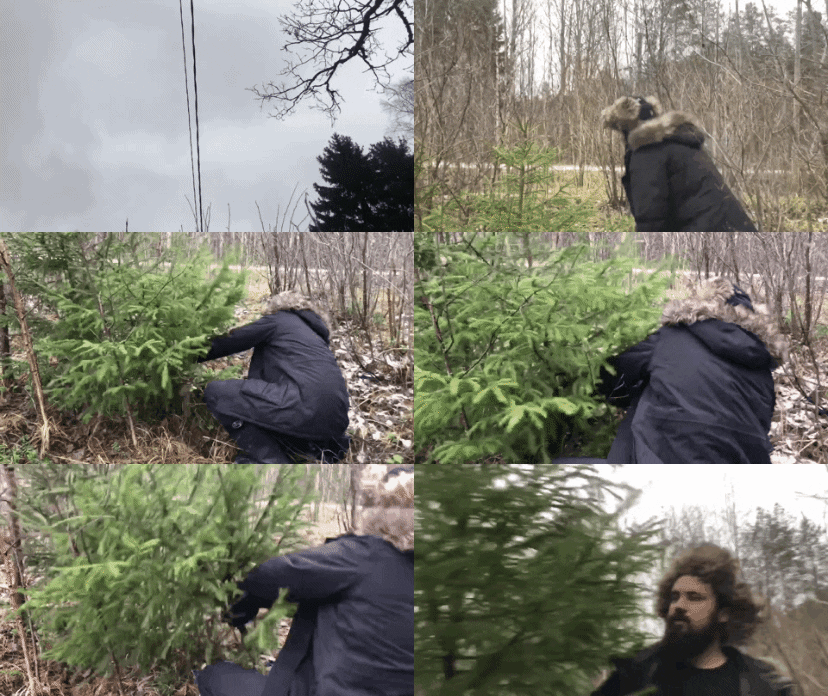
There are a few sensible rules to protect our wilderness though, which are all explained in the app. Most importantly, you must choose a tree that wouldn’t be able to grow to full height anyway, such as one underneath power cables.

According to Estonia’s Forest Act, you are also allowed to take ornamental branches, such as for a Christmas tree wreath, as long as you do not harm the rest of the tree. Taking just the top off a tree, for example, is prohibited.


The state forests where you can cut down trees are marked in dark green, while private forests (where you can only cut down trees with the permission of the land owner) are marked in light green, and nature reserves (where taking trees is strictly prohibited) are marked in brown. Most helpfully, power lines are marked as blue lines. Your own location is shown on the map too so it’s easy to navigate.

We found our tree near Saku, underneath those power cables marked above. After asking the tree if it would like to come home with us, we cut it down and took it back to Tallinn to be decorated.


I confess that I made one mistake. You must pay for your Christmas tree before cutting it down, not afterwards like I did.

The app lists prices for trees up to 5 metres, which you can pay straight from your phone bill by calling a number listed in the app.


You can pay for trees above 5 metres too, although only by bank transfer. In case you are interested, a tree larger than 20 metres will cost you €640. Our tree was a modest 1.5 metres tall so it cost us €8.

Although this payment is difficult to police, it’s possible that authorities may stop you when carrying a tree and ask to see your proof of payment. And you can’t get away with saying you couldn’t connect to make the payment because even the forests of Estonia tend to have good connectivity.

RMK began inviting Estonians to cut down their own Christmas trees from state forests in 2008. Their main objective is to simply maintain the tradition and encourage Estonians to spend more time in the wilderness. Several state institutions and companies choose this option over shop-bought alternatives and sometimes even see it as a team building exercise.

You can watch the full video we made about this whole process below here (and don’t forget to subscribe to our Estonian Saunas YouTube channel if you enjoyed it).


…But where’s the sauna?
We usually just write about Estonian saunas on this blog, but there are actually a few similarities between Christmas trees and saunas.

Both traditions are enjoyed around the world, yet rooted in the prehistoric culture of peoples living around the Baltic sea. Believe it or not, the Christmas tree can also be traced back to Estonia.

About 500 years ago, Tallinn joined the Hanseatic League and a lot of German merchants settled here. They saw local Pagans ceremoniously burning a tree during their winter festival and decided to adapt the tradition for themselves. The House of Blackheads in Tallinn erected their own tree in 1441 and then did the same in Riga in 1510.


Admittedly, this story is a little murky. The prehistoric tradition isn’t well recorded and it’s unclear how this adapted version of the tradition evolved into the decorated trees we use at Christmas today.

Estonians and Latvians still both argue each Christmas season that theirs was the first Christmas tree. The Latvians even put up a plaque and a monument to their first Christmas tree, which they insist (incorrectly) was in Latvia. We might be a little biased of course.

The sauna tradition also comes from prerecorded history and has been adapted a lot over the years. For one thing, there’s an app for that too! We can control our modern Estonian saunas by using a HUUM app to switch them on remotely. That’s what we did after choosing our tree so that it was heated for us by the time we got home from the forest.


(This article was first published on medium.com/estoniansaunas, on December 15, 2019)

Thank you Adam, for your comprehensive guide to the Estonian Christmas tree app! I’ve actually utilized the Latvian version of this program; we cut down our own tree from a Latvian National Forest ten years ago while visiting my brother-in-law in Rīga during the holidays.

Adam runs the blog Estonian Saunas together with Anni. Their global online store will be launching soon, but in the meantime take a look at EstonianSaunas.co.uk if you are in the UK, and if you’re visiting Estonia stop in to see the two saunas that are open to visitors: the Tallinn smoke sauna and the Tallinn Airbnb apartment with an e-sauna. Estonian Saunas is also a sponsor of the European Sauna Marathon, which will be February 15, 2020! In addition to the blog, you can follow Adam and Anni’s adventures exploring and exporting Estonian saunas on Instagram, Facebook, YouTube and Twitter. You can also join the Facebook group for fans of Estonian saunas.

With less than a week to go until Christmas, we here at 24 Days of a Baltic Christmas want to wish you patience and endurance to finish your last holiday preparations! As my brother (maybe?) says, “the storm before the calm!” We hope you’ll join us tomorrow on Day 20, for a Christmas story from the DP camps...


Wednesday, December 18, 2019

Baltic Christmas Day 18 - A Rīga Winter

Very excited to have Māra McLaughlin-Taylor on 24 Days of a Baltic Christmas today, with her thoughts on winter in Rīga!!!


Often when someone asks me about what Riga is like in the winter, they assume that it’s too cold and too dark and by association, miserable. Truthfully, I find it delightful!

Although I spent much of my childhood in Latvia, it fell during those light-filled summer days of school vacation. Having just moved to Riga from Asheville, North Carolina on a permanent basis, this is my very first winter and Christmas season here. [Disclaimer: I grew up in the tundra of the Midwestern United States, so my context is set against that. This also means that I already own some of the innate skills of those who have grown up in colder climates (like walking on ice in proper footwear).]


It seems as though the “trick” to a joyful winter season is to fully participate in both the inside and the outside life and the traditions that come along with them. So today, I’m sharing the ways I’ve found to enjoy this time:

Inside life

Rigans are already big on houseplants, so greening up your apartment or home isn’t much of a stretch (The Capital R blog writes about this phenomenon beautifully). I love the tradition that each Latvian is entitled to chop down their own tree in a state forest (there’s an app for that), but given that I’m without a car, and the nearest forests in which it is legal to cut down trees is a good 40km away, I’ve settled for decorating my houseplants. A more motivated version of me would go out to any local Christmas market and buy greenery. I might get around to it yet, before December 24th! But, I more than make up for it in the next area…


Lights are essential! There aren’t many hours of daylight in the winter and compared to where I used to live much closer to the equator, the daylight you do get is like lukewarm tea--cloudy and watered down. Candles, already revered in Latvian culture, are a must (check!), and many Latvians additionally opt to get electric candelabras for their windows (check!). The tradition of lighting advent calendars is popular here, and you can double both your greenery and light by having or making one (check!). I’ve also noticed that small LED light strings are becoming a popular and energy efficient way to decorate (check!). And, at the risk of going overboard, we have a plant light (which mimics sunlight) under which we sun ourselves (and wait for longer days).


Winter seems to be the season for fragrant spices, and here is no different! We especially like the fresh blends from Spicehouse to add to our gingerbread, oatmeal, and fruit. I start every morning with a cup of strong coffee to let my body know it’s time to wake up even though it’s dark outside, and these days it is made much better with a liberal dash of masala chai spice from my local zero-waste store Turza. An evening option is mulled wine, commonly found this time of year, but also easy to make at home with your own spice mix. 


Food is another essential cozy element for time indoors. As it was when we lived back in the States, this is the time for warm stews and casseroles. Latvians are masters of soup and eat it on a daily basis! When I grow tired of native root vegetables, however, I feel lucky to be in proximity of other goodies from the rest of Europe. It is citrus season, and Spanish mandarin oranges are in plentiful supply to keep my Vitamin C boosted. Surprisingly, in Riga I’ve also discovered a love for persimmons. I’ve never seen them as large, firm, and sweet as they are here.


Finally, the dark weather is perfect for reading. I’ve never found myself more Latvian than when I’m curled up inside in the dark thoroughly engrossed in a good book (why do you think the mascot for Latvian literature is an introverted writer?). I’ve already joined two different book clubs (one started by Expats in Latvia and the other generously sponsored by the American Embassy). When I run out of something to read, bookshops in Riga are like nail salons in my old Brooklyn neighborhood--there’s one on every block. The wonderful Roberts Books is a tucked-away piece of magic, full of English-language books old and new. Zvaigzne ABC is a major book retailer, and their outlet in the Old Town holds some reasonable treasures and kind cashiers.


Outside life 

I don’t know who originally said, “There is no bad weather, only bad clothing,” but it’s absolutely true. One thing that I learned about Riga matches another quote: “If you don’t like the weather, wait five minutes.” In going outside, you must be prepared for rapid changes in wind, precipitation, and temperature. A good pair of waterproof boots might be the most essential way to stay grounded and warm on slippery cobblestones, other uneven surfaces, and random giant puddles (my pair of Columbia Ice Maidens haven’t let me down yet). Generally, some combination of layers (shirt, sweater, vest, outer down shell) allow me to adjust to most anything Mother Nature throws my way. Of course, you’ll also have a scarf or shawl, because no Latvian would be caught dead with a “naked” neck, lest the fearsome “wind” touch it (a good number of Latvian ailments involve wind and breezes touching exposed skin). A brilliant tip I’ve picked up from the locals to navigate the frequent misty, but not quite rainy, weather is to ditch struggling with an umbrella and simply wear a thick hat. Once this is all on your person, you’re ready to transition to the outdoors!


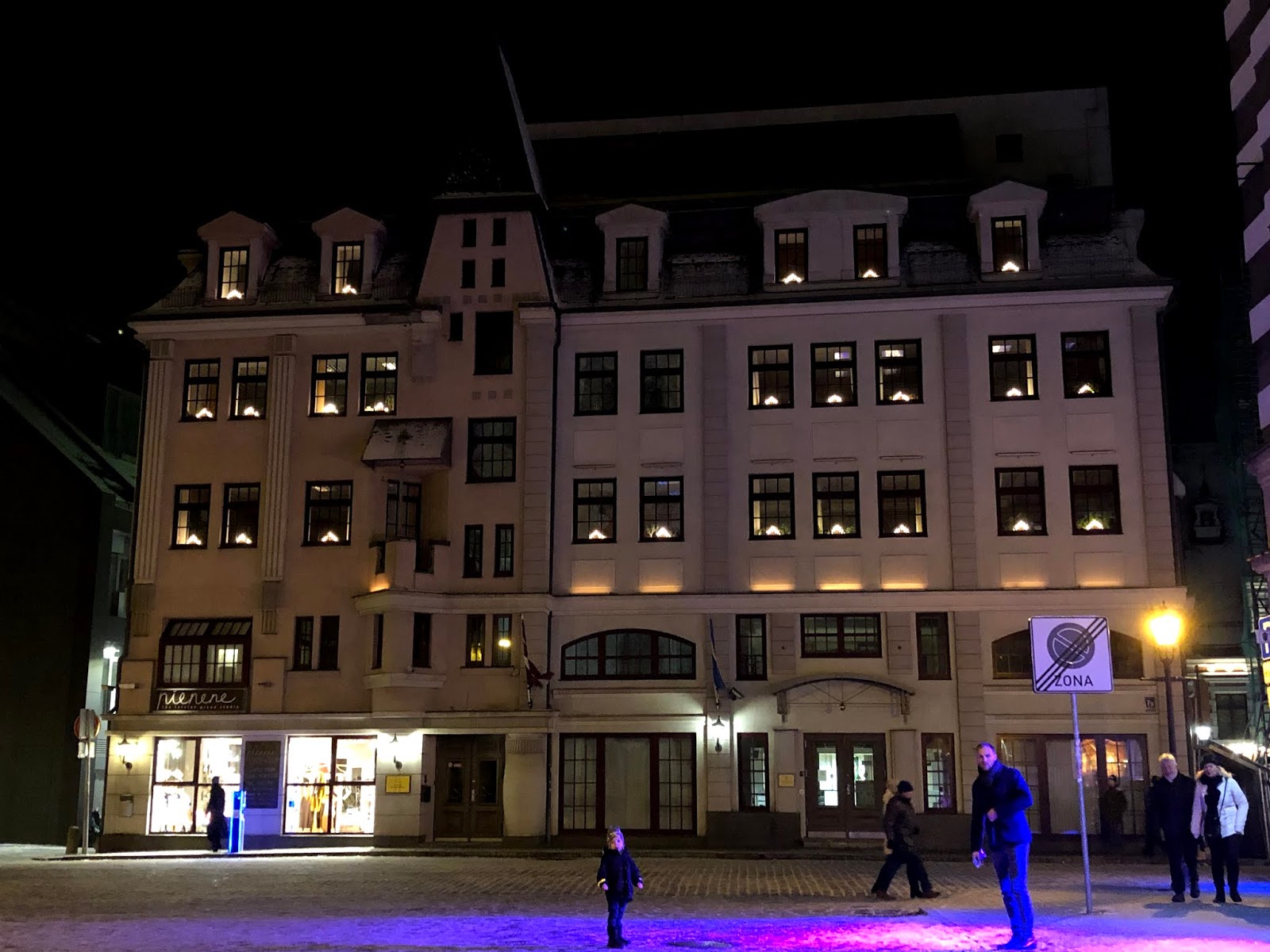
Beginning on the last weekend of November/first weekend of December, there are Christmas markets around every corner and for every taste--from traditional crafts, to homemade foods, to social entrepreneurship, to zero waste, and beyond. It is enjoyable as a destination to walk to, and of course helpful if you still have presents on your list! One of my favorite locations is the Rabbit Kingdom, set up in Esplanade park, where a mini set of castles and houses with stained windows sit atop a straw base for a whole host of rabbits to hop around in. And of course, the main Christmas Market in the center of Old Town, offers a daily romantic view of small houses and lights against the backdrop of Riga’s famed church spires.


Along the way, you’ll be treated to lights on most major streets and even a trail of public art Christmas trees. This is the THIRD public art and light display across the city since I arrived in August. This city loves their art and lights and admittedly, it is a compelling way to battle the darkness!


Event-wise, there is something happening constantly. Facebook events and Riga.lv have kept us apprised of a constant slew of Christmas parties, decoration making, tastings, films, and other things to do. Perhaps all of these events are geared toward the less introverted Latvian (they do exist!), but as a new resident I’ve found that you won’t know as much unless you get out there. A few weekends ago, the Rotary held their annual Santa Fun Run benefiting children in hospital. The hundreds of running Santas, some with creatively embellished costumes (and many dog-like reindeer), were as fun to watch as the confused faces of Old Rīga’s tourists.


This is also the time to think of others. Because we won’t be with our own families this year, our goal has to been to gift to someone else each week of advent. Each year Laima chocolates sets up a picturesque small house next to their famous clock that features the Christmas wishes of children across Latvia. One simply goes in, picks a card, and delivers the gift back within five days or so (we hope little Peter enjoys his set of Hot Wheels!). Other worthwhile causes include Engelu Pasts, which fulfills the Christmas wishes of over 8000 seniors across Latvia, the young folks of Latvijas Kustiba par Neatkaribu Dzivi making 1,000,000,000 candles to open their own group home, and local animal shelters. The gift of giving can also be applied to walks around town. The Kurts coffee huts, recognizable by their name written in big-bulbed lights, is run by a family whose proceeds go to their disabled son’s needs. Recently opened RB Bakery, is one of the few public places that employs people with disabilities. This week’s highlight will be the semi-annual craft fair in the Riga Central Railway station that features exclusively disabled and elder artisans.


All in all, I think it would be safe to say that I’ve only scratched the very surface of how to stay sane and actually enjoy the Latvian winter. But if the little bit I’ve experienced thus far is any clue as to the larger whole, life keeps on charging ahead here and I, for one, am glad to be carried along. Here’s to more exploring and discovering!


Paldies Māra! So happy to have you share your thoughts on the Rīga winter!! My brother moved to Latvija some years ago, and while many of his photographs are taken in the darkness of the Baltic “day,” many of them feature all the things you mention, and it does make everything seem merry and bright!

Mara McLaughlin-Taylor is the daughter and granddaughter of Latvian Displaced Persons. A dual citizen of the US and Latvia, it’s only taken her near 40 years to move to Rīga. She is passionate about sharing Latvian culture, which she primarily does through language, food, and as an administrator of the Baltic Imports Facebook community. You can find more of her beautiful photographs on Instagram - instabaltica.

Tomorrow on 24 Days of a Baltic Christmas, please join us for an a guide on how to cut down your very own Christmas tree in Estonia!


Related Posts Plugin for WordPress, Blogger...