Showing posts with label astronomy. Show all posts

Tuesday, May 29, 2018

Your Guide to Roper Mountain Science Center

With summer vacation upon us, we put together this guide to Roper Mountain Science Center, one of our favorite places in Greenville. It has everything you need to know about the various trails, gardens and other features, as well as the must-attend event info and other tips to help make your time at RMSC this summer memorable for the whole family!


YOUR GUIDE TO ROPER MOUNTAIN SCIENCE CENTER


What is RMSC?


In the early 1980’s the Greenville County School District saw a need for a science center that could provide hands-on science enrichment activities to the district’s 68,000 students. In cooperation with the community and with corporate support, the Roper Mountain Science Center Association was born, opening its doors in 1985. Since then its annual student attendance has grown from 4,600 to over 120,000, with 400-600 students visiting every day for learning labs to supplement their classroom education.

However, RMSC isn’t just for Greenville County School students. The facilities are open to the general public during Second Saturday activities, Friday Starry Nights, and Butterfly Adventure as part of admission. Also, during the school year and during daylight hours, families can visit the nature trails, outdoor play area and gardens at no charge.

Exploring the Ecology Lab in Harrison Hall of Natural Sciences

What’s at RMSC?


The 62-acre campus is accessible from Roper Mountain Road, just north of the I-385 exit. A one-way, mile-long driving loop takes you to the various buildings, with three main parking areas located throughout. The largest of those is located just to your right as you enter, and is used for most large events with shuttle buses providing transportation among the various areas.

Just next to the parking lot is the amphitheater, familiar to many local families from Roper Mountain Science Center Holiday Lights. While the holiday light display celebrated its 26th and final season last year, visitors will soon be making new memories on the site of the old amphitheater; construction will soon begin on a 24,000-square-foot facility that officials say will focus on environmental science. The two-story facility is expected to open by 2022.

The RMSC Marine Lab is home to more than a few animals
  
Next on the loop is Harrison Hall of Natural Sciences, home to the Fred W. Symmes Tropical Rainforest Conservatory, Nancy Hall Eskew Rainforest Lab, the Daniel Keating Norris Discovery Room, the Palentology & Earth Science Labs, the Computer Lab, an Ecology Lab and Marine Lab. The Harrison Hall is open to the public only during special events, however there are plenty of opportunities to explore the newly renovated building during Second Saturday events and the upcoming month-long Butterfly Adventure (see events section below for more on these fantastic opportunities).

Related articles: The Ecology Lab at RMSC

At the very heart of RMSC is the Giant Dome Theater and Hooper Planetarium. The state-of-the-art planetarium opened in 1989 and just underwent a $1 million renovation, featuring a new 360° full immersion dome, 4K projection, state-of-the-art lighting, dynamic 5.1 surround sound, interactive lobby exhibits and more. The facility is open to the public during the Friday Starry Nights program (see more below in events section) and on 2nd Saturdays.

Hooper Planetarium

Adjacent to the planetarium is the Symmes Hall of Science, also newly renovated, and home to STEM, Physical Science, Weather and Forensics programs, as well as 300-seat Hipp Auditorium. Symmes is open to the public during special events.

At the east end of the campus is Daniel Observatory. Home to a 23″ refractor telescope which is the 8th largest of its kind in the US, the Observatory is open each Friday evening from 7-10pm for public observation. The facility is also utilized for astronomy classes, special events, and organized activities by the Roper Mountain Astronomers.

Looking through the telescope in Daniel Observatory

The adjacent David H. Wilkins Conference Center houses facilities for meetings, events and classes for school and public programs. For more information on facility rental please call RMSC - 864.355.8925.

Outdoors at RMSC


Adjacent to the Harrison Hall is the Butterfly Garden, a joint project of the Roper Mountain Science Center, the roper Mountain Science Center Association, and the Greater Greenville Master Gardeners. The garden is open during daylight hours when the center’s main gate is open, and a pavilion overlooking the wildlife pond is a perfect spot for a picnic lunch.


From the butterfly garden it is a short walk to both of the RMSC treehouses. The one closest to the main loop road is ‘Anatomy of a TREE House’ and uses elements that resemble the trees that inspired it including exposed concrete "roots," a wraparound squirrel's nest with a real tree growing through it, and a slide. Overlooking the pond is ‘Treetop Clinic’ which focuses on environmental issues: the water cycle, the solar cycle & path of the sun, and the plant life as seen from the treehouse.

Related article: Treehouses at RMSC


On the opposite side of the pond from the butterfly garden is the Wildwood natural play area. A relatively new addition, children can play with natural materials such as stumps and sand, building, digging and creating to their heart’s content while parents comfortably watch from one of the benches. A big part of Wildwood is in the shade, and the little play house along with various slides, bridges, seesaws and even a canoe will keep the kids busy learning and exploring.


Beyond Wildwood and Harrison Hall of Natural Science are the arboretum and the Living History Farm & Schoolhouse. The farm is open to the public only during special events but is definitely worth a visit during one of the Second Saturdays; history comes to life with authentic log cabins, corn cribs, a barn, a blacksmith shop, a school and a former slave cabin. Gardens, fields, pasture, a farm pond, and farm animals typical of life in the Upstate in the early 1800′s complete the scene.


Winding through the RMSC forest are a 1-mile asphalt nature trail and multiple forest trails. The Nature Trail loops along the hardwood and pine forests of the science center grounds and features signs informing visitors about native plants and animals that might be found in our region. The BeWell fitness trail (which utilizes a portion of the Nature Trail) starts by the main parking lot, and has ten fitness stations that include different stretches and exercises along with instructions on properly completing them. There are several picnic areas along the way, and multiple loops on the east end, connecting the Living History Farm to the butterfly garden and Wildwood. You can find a map of the trails here.

On the Symmes/Daniels Observatory end of the Nature Trail you might notice another of RMSC’s new activities, the Low Ropes Course. Visiting groups can schedule sessions for team-building activities by contacting the Roper Mountain Science Center.


Another fun feature along the Nature Trail is the Stegasaurus near Harrison Hall. RMSC is hoping to add a dozen replicas of herbivorous and carnivorous dinosaurs to field stations along the trail, with panels giving details about the dinosaur and its habitat. Keep your eyes open for the 19-foot Tyrannosaurus rex! The Dinosaur Trail is expected to be open the summer of 2020.

Events at RMSC


Starting this Friday, June 1st, Butterfly Adventure is returning to RMSC for its third year! Visitors will be able to enter the living exhibit in the Fred W. Symmes Tropical Rainforest where hundreds of colorful butterflies will be flitting about until July 13 from Tuesday through Saturday. In addition to the up-close butterfly sncounter, visitors will be able to explore the Harrison Hall of Natural Sciences including the Marine Lab, and experience life in SC in the 1800s in the Living History Farm.


Another great way to experience RMSC is during one of the Second Saturday events. On these select Saturdays the Living History Farm, Harrison Hall, Hooper Planetarium, Daniel Observatory and Symmes Hall of Science are opened to the public for STEM and other programs with hands-on demonstrations and special exhibits. Upcoming 2018 Second Saturdays include Blueberry Festival on July 14, Star Wars on October 13 and the Fall Harvest Festival on November 10.

Related articles: Blueberry Festival at RMSC


On Friday nights (January through November) the Planetarium opens for Friday Starry Nights with 6pm and 7:30p Planetarium shows that include Carolina Skies (a live sky talk), the feature show, and the SpacePark 360 Virtual Rollercoaster.


During the months of July and August the Planetarium is also open select Tuesday, Wednesday and Thursday nights for planetarium programs. There are shows suitable for all ages; for a schedule and more info check out the calendar here. If music is more your thing, check out one of the laser shows featuring music ranging from pop to country, from the Beatles to Pink Floyd. Laser Shows in the Planetarium will be taking place from July 17-28, see website for schedule.


RMSC also has summer Science Exploration camps, however all the programs for the 2018 season are currently full. The robotics, Lego, nature and other programs are in very high demand, often filling up during the first weeks of registration.

Patch programs and group programs are available for Cub Scouts & Boy Scouts ranging from a self-guided program to Webelos Activity Badge Workshops in Harrison Hall. See website for more information.


Admission Info


Fee info for the various RMSC programs can be found on their website, here. However possibly the most convenient option is to purchase an annual family membership. We have been RMSC members for years, enjoying free admission to Friday Starry Nights, Second Saturdays and Butterfly Adventure. Members also enjoy discount ticket prices for special events such as the laser shows, and early registration and discount to summer camps. Family memberships are $65 – see website for details.

Along with a RMSC membership you’ll also get the benefit of admission to more than 300 different science centers and museums through the ASTC (Association of Science-Technology Centers) Passport Program. They include nearby favorites such as EdVenture Children’s Museum in Columbia and the Spartanburg Science Center, as well as North Carolina’s Greensboro Science Center, Morehead Planetarium and Science Center in Chapel Hill, the Museum of Life and Science in Durham, and the Western North Carolina Nature Center in Asheville.


Friday, August 4, 2017

Your Femme au Foyer Great American Eclipse 2017 guide!

We’ve established that the Upstate is THE place to be for the total solar eclipse on August 21st, with 2 minutes and 40 seconds of darkness as the moon blocks out the sun at 2:38pm. We will not experience another total eclipse until 2078 (although in April of 2024 South Carolinians will only have to travel as far north as Indianapolis to experience a total eclipse in the United States)! Hotels in the area have pretty much been sold out for the last couple of months, so if you’ve not already made plans you might be left behind in the… light?

However, for those of you headed to experience the eclipse anywhere between Newport, Oregon to Charleston, SC, here are the top solar eclipse necessities, courtesy of Femme au Foyer.

1. Eclipse glasses. This one is non-negotiable; the danger to your retinas is so real that Greenville County schools have pushed back the first day of school so that the eclipse doesn’t coincide with school pick-up. We ordered ours online, where they can be had for a very reasonable price. Be aware that although adjustable (can be folded smaller or larger to fit various heads), regular glasses might be too big for kids. I found this family pack that has smaller sizes for the boys… (Note, your camera and telescope also need a special filter if you’re planning on looking at or photographing the eclipse with them.)


2. When sending out your party invites or ‘wish you were here’ cards, you’ll want to pick up Total Eclipse of the Sun postmarks. Be ready to splurge an additional 25 cents for the fancy envelope, which blocks the sun from hitting the stamps; you need it because the stamps are heat sensitive. The first U.S. stamp to use thermochromic ink, placing your finger over the black disc on the stamp causes the ink to change from black to clear to reveal an underlying image of the moon (it reverts back once it cools). The photograph that appears on the stamp is from an actual total solar eclipse that was seen over Jalu, Libya in 2006, taken by astrophysicist Fred Espenak who also photographed the full moon visible underneath.

3. Soundtrack. Bonnie Tyler makes the cut with Total Eclipse of the Heart.
Blinded by the Light and Eclipse by Pink Floyd (Dark Side of the Moon) are also on the playlist. However for the 2 minutes and 40 seconds of darkness we’ll be listening to Bruce and Dancing in the Dark. Maybe afterwards we’ll put on Carly Simon’s You’re so Vain; “…you flew your Lear jet up to Nova Scotia to see a total eclipse of the sun.”

4. Refreshments. For your afternoon coffee break, pick up a bag of Total Eclipse from Leopard Forest, coffee roasters located in Travelers Rest. The dark roasted coffee blend of ½ Organically Grown Sumatra, ¼ Rainforest Alliance Certified Brazil & Colombia, and ¼ Farmer-Direct Zimbabwe is an earthy, smoky, wake-up type of coffee according to the Leopard Forest website. Order online or pick up a package at the Forest Coffeehouse, Swamp Rabbit Café & Grocery or one of the dozens of other retailers in SC, NC, TN, VA and KY that carry Leopard Forest. Guaranteed to keep you awake until 2:38pm!


Looking for something other than coffee? Heron Hill has an “Eclipse” red wine out, and FiftyFifty Brewing Company out of CA has an Imperial Eclipse Stout. Or, being as we're in The South, Casey Jones Distillery is offering a Total Eclipse Moonshine….
   
5. Snacks. Astrobake these eclipse cookies for the perfect eclipse treat, although if you’re looking for the easier route there are plenty of store-bought options: Eclipse gum, Sun chips, Moon Pies… 

There are plenty of great articles on finding an Eclipse Party in the Upstate, so if you’re still looking for the perfect place to experience totality, you might want to check out the links I’ve added below. Happy eclipsing!!!


* NASA has partnered with video platform Stream to pull off an unprecedented livestream of the eclipse using a network of 50 high-altitude weather balloons equipped with cameras. Drifting at an average altitude of 100,000 feet, these balloons will offer a view of the August eclipse unlike any other. According to Stream, this livestream event is expected to be viewed by more than 100 million people. Find it here!

* Roper Mountain Science Center’s Eclipse Extravaganza is sold out, however there are still tickets available for the Friday night Eclipse: The Sun Revealed Starry Nights program, and RMSC is selling eclipse glasses in the lobby. The Children’s Museum of the Upstate also has eclipse programming, as does Lake Conestee Nature Park. For a great roundup of the events happening in Greenville and vicinity, check out GVL Today's list of Where to go for the Total Solar Eclipse in the Upstate!

Friday, July 28, 2017

Five on Friday: the August edition

It’s hot. With temperatures in the mid-90s for the past week, I don’t think I’m the only Upstate mom that has been spending more time indoors. While we’ve been enjoying our time at the library, The Children’s Museum of the Upstate, Summer Movie Express $1 movies and on the couch at home watching TV (shhh, don’t tell!), we’ll be making the effort to get out to cross some last things off the summer bucket list before school starts this month. Now if only we could get temperatures to drop under 90 for a week or so, that would be great.

1. The Carolina Panthers return to Spartanburg! The Panthers kicked off their training camp at Wofford College Wednesday with a kickoff party, and practice will continue through mid-August here in the Upstate. For more on what to expect, check out last year’s post, Carolina Panthers training camp. For a training camp practice schedule, please visit the official team page.


2.  Every Friday night the Roper Mountain Science Center hosts two showings of their feature show Eclipse: The Sun Revealed in the newly renovated T.C. Hooper Planetarium. Learn about the historical and cultural view of eclipses, the geometry behind them, and how to safely view one in preparation for the total solar eclipse that will take place on August 21st. Starry Nights at RMSC have never been more exciting! For more information and for tickets please visit the RMSC Starry Night website, and for a review of the show please see my post on Starry Nights. Bonus: Hooper Planetarium is air conditioned…

3. The Indie Craft Parade is coming back to Greenville for the 8th year this September, and tickets go on sale August 1st! The three-day festival celebrates handmade art, and has become one of the premier Southern craft events showcasing quality southern-made goods. Read about it here, buy tickets here.

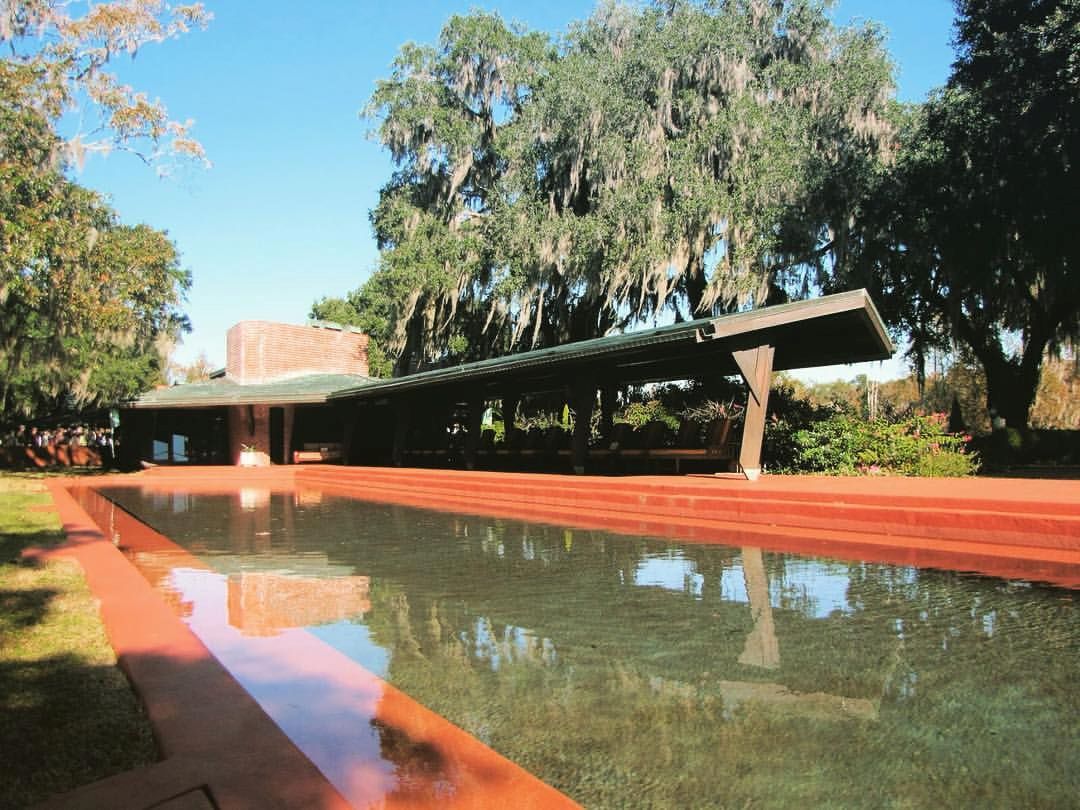
4. This next event requires a bit more of a commitment, but it is a once-in-a-lifetime opportunity to explore one of the two Frank Lloyd Wright properties in South Carolina, and his only plantation – Auldbrass. The estate is only opened to the public every other year on one weekend in November, and online ticket reservations are opening August 1st. Warning - the tickets sell out quickly! For a picture tour of Frank Lloyd Wright’s Auldbrass please visit my post on the subject, and for ticket reservations visit the Open Land Trust website.


5. A public service announcement: The $10 lifetime National Park Service senior pass for U.S. citizens age 62 or over will increase to $80 on August 28, 2017. Although still a good deal in my opinion, if you’re not already a lifetime pass holder, you might want to take advantage of the lower rate by visiting a federal recreation site before the end of the month. If you would prefer to buy online from the USGS store, or by USPS, there is an additional charge of $10 for processing the application. The passes are valid at more than 2,000 Federal recreation sites where entrance fees are charged. The National Parks centennial has passed, but our public lands need our support now more than ever!

Stay cool,
x Femme au Foyer

Monday, May 22, 2017

Starry Nights at the newly-renovated Hooper Planetarium

The T.C. Hooper planetarium at Greenville’s Roper Mountain Science Center (RMSC) reopened early this year with more than $1 million in improvements. The 1989 planetarium was forced to close last year due to mold, but is back and better than ever this spring. The three shows currently running have been selling out in advance, and with the solar eclipse at the end of the summer approaching, the planetarium’s popularity is only going to increase.


The renovations are obvious as soon as the show starts; the old planetarium projector was replaced with a new 4K digital system, and a 360° full immersion dome with dynamic 5.1 surround sound and state-of-the-art cove lighting has been installed. Simple cosmetic work was also done, including painting the theater and lobby, and replacing the chairs and carpeting.


My boys loved the new arcade-style games in the lobby, especially piloting the moon lander. At one table they can build their own spaceship, and cool posters line the walls. RMSC advises ticketholders to arrive 20 minutes before the start of the program to facilitate parking, seating and a timely start, but a line will sometimes form in the lobby even before then. Don’t want to show up 30 minutes early just to guarantee a spot in the front of the line? Although the seats in the rear of the planetarium are considered the best, the comfortable chairs and 360° full immersion dome mean that even those visitors seated in the front row will still have an excellent experience.


In addition to programs for the 50,000 students that visit the planetarium annually, RMSC offers public programs each Friday on “Starry Nights.” Tickets cost $6 for adults and teens, and $5 for children, senior citizens, and military. Admission is free for RMSC members and children under the age of three. Currently showing are programs appropriate for a wide range of ages.

The ceiling in the lobby

In One World: Big Bird’s Adventure children can join Big Bird and Elmo on an unforgettable journey to the Moon and back. “When Elmo’s friend Hu Hu Zhu stops by Sesame Street for a visit, he notices that Sesame Street is a little bit different from his home in China. But when he looks up at the sky, he feels right at home. Elmo and Hu Hu Zhu may live in different cities, but they share the same sky! With a little help from Big Bird, the two friends learn about the Sun, the Moon, and the Big Dipper, then blast off in an imaginary rocket to the Moon! Along the way, they invite the audience to sing along to songs about space and celebrate the sky that belongs to everyone.”

In Magic Tree House: Space Mission travel with Jack and Annie in their Magic Tree House as they proceed to answer questions left for them in a mysterious note. “With the help of the astronomer, the Internet, an astronaut, books, and the note's author, Jack and Annie are… taken on a wondrous journey of adventure and learning.” Space Mission was produced by Morehead Planetarium and Science Center, and features Mary Pope Osborne, author of the Magic Tree House book series and a graduate of the University of North Carolina at Chapel Hill.

Finally, in Eclipse: The Sun Revealed, viewers are taken on a journey through the historical and cultural view of eclipses, exploring the geometry behind an eclipse while covering how to safely view an eclipse. With a first-hand account of one eclipse chaser's experience during a total solar eclipse, the audience will be ready for the solar eclipse this August. RMSC even has viewing glasses available for purchase in the lobby.

The Big Dipper and Ursa Major in the Upstate's Sky Tonight

Each program kicks off with Upstate’s Sky Tonight, a 15 minute pre-show where you’ll learn what’s visible in tonight’s sky with a view of the planets and constellations as visible in Greenville. Then after the feature program comes the Mars rollercoaster, although this aspect may not be as popular with viewers who tend to get motion sickness…  


After each show, viewers are invited to observe the stars through the 23-inch refractor telescope at the Charles E. Daniel Observatory. For tickets and more on Roper Mountain Science Center, T. C. Hooper Planetarium and Starry Nights, please visit the RMSC website

Wednesday, November 16, 2016

The super-smoky Beaver Moon

Tuesday afternoon we headed north towards the Blue Ridge Escarpment to Bald Rock Heritage Preserve. As the days grow shorter it’s harder to find the time after school to get outdoors, but it wasn't an issue on this particular trip as we planned to watch the sun set – and hoped to see the moon rise.

I call this shot "partial solar yo-yo eclipse"

We arrived with less than an hour of daylight to explore the granite outcrop, but as the boys had just recently explored all the way down to the base (on the day I hiked the Rim of the Gap) they were content to stay close. We spread the picnic blanket and had a snack, watching the sun sink lower into the haze.


The 2,312-acre (as of Tuesday morning) Pinnacle Mountain Fire is still growing; however the fire is considered 25% contained as burnout operations continue. The smoke is lingering due to lack of wind and night-time inversions, and I was hoping to get an interesting view of the smoky Upstate from this vantage point up near Caesars Head. As we had approached Highway 11 on the way up the smoke had increased and visibility decreased, and upon reaching Bald Rock we were rewarded with an intensely hazy view and a red sun. As we finished up our picnic that sun suddenly disappeared, not behind the mountains but into the smoke.


The moon was set to rise at 5:50pm, and so we lingered on the rock, examining the graffiti and testing out our headlamps. I had guessed that we wouldn’t be able to see the moon rise, but figured sooner or later it would rise above the smoke and be visible. However, an hour later there was still no sign of it. Knowing when to call it smoked-out, we headed down the mountain.


Wouldn’t you know it, that supermoon decided to show itself as soon as we reached Highway 11! The enormous orange moon is at its perigee, or closest point to Earth during the lunar orbit, and is the biggest and brightest supermoon to rise in almost 69 years. The full moon won't come this close to Earth again until November 25, 2034. The Farmer’s Almanac says this ‘Beaver Moon’ signifies the best time to set beaver traps before rivers, lakes and streams freeze over.


As we returned to Greenville the orange moon was our constant companion. We came home to hot chocolate before turning in for the night, and as the boys turned off the lights I asked if it was worth the drive, despite not seeing the moon rise. A consensus was immediately reached – of course it was worth it, if even for no other reason than being allowed to stay up a little late…

Wednesday, September 28, 2016

A World of Energy

Learning to cast a fly

At the very northern reaches of the Upstate, Lake Jocassee is fed by four cold mountain rivers: Whitewater, Thompson, Horsepasture and Toxaway. Located in the southeast corner of the lake is the Jocassee Hydro Station, which separates it from the beginning of Lake Keowee, also known as the Keowee River.

One of the permanent exhibits features topographical maps of the area

The man–made reservoir is approximately 26 miles long and 3 miles wide, averaging about 54 feet deep with 300 miles of shoreline. The project began in 1971 with the construction of the Keowee and Little River Dams, and today cools Duke Energy’s three nuclear reactors at the Oconee Nuclear Generating Station. Below the dams the water joins to form the Seneca River and Lake Hartwell, eventually emptying into the Savannah River.


The name Keowee is a Cherokee name meaning "place of the mulberries." What formerly had been the Keowee River was part of the Cherokee Lower Towns region, and Keowee Town had been located on its banks before it was inundated by Lake Keowee. Today it is a popular destination for recreation, with boating, swimming, sailing, kayaking and other watersports bringing in crowds on summer days. Boat launches and access points dot the shores, including in the public parks. There’s Estate Park, managed by the SCDNR, and then 1,000 acre Keowee-Toxaway State Park, which is managed by Duke Energy together with the state and consists of three different parks: Mile Creek Park, South Cove Park and High Falls Park.  Some of the islands on the lake are accessible for daytime use, and the area is popular with fisherman for its three types of bass, crappie, bluegill, yellow perch, catfish, brown trout and rainbow trout.

The towers as seen from the auxilliary parking lot

Oconee Nuclear Station has a capacity of 2,538 megawatts, and according to the Duke Power website was the first nuclear station in the US to generate 500 million megawatt-hours of electricity. The output can power 1.9 million homes, and Oconee was just the second nuclear station in the US to have its licenses renewed by the Nuclear Regulatory Commission (NRC) after the initial licensing of 40 years. Although security at the station is strict, visitors can head to Duke Energy’s World of Energy for educational activities and interactive exhibits interested in learning more about electricity generation, Duke Energy and Lake Keowee. World of Energy regularly hosts family-friendly events such as National Hunting and Fishing Day which took place this past Saturday. We attended together with Lauris’s scout troop, exploring the indoor and outdoor facilities on a hot September day.


In addition to the permanent exhibits, the free event featured booths, games and displays by a dozen partners including Clemson, 4-H, the DNR, USFS, Upstate Forever, Cabela’s and Trout Unlimited. Kids had the opportunity to climb a rock wall, shoot with a bow or air rifle, try their hand at fly casting or lake fishing, go out in a kayak on Lake Keowee, put out a ‘fire’ with a Forest Service wildland fire engine’s hose, or don a camouflage suit and play hide & seek in the leaf litter. There was a hunter education trail set up, although really all the activities stressed safety, conservation and responsible recreation. We met a few native SC critters, explored the Butterfly Garden, took a siesta in the hammocks and had a snack overlooking Lake Keowee.

rock climbing, fire hoses, archery, fishing and 'find the baby'!


The next event at World of Energy is in preparation for the 2017 Great American Eclipse. The October 25th ‘Super Tuesday’ program features a lecture by Dr. Donald Liebenberg, adjunct professor of physics at the Clemson University Department of Physics and Astronomy. For more information on this and other programs at the World of Energy, please visit the Duke Energy website.

The butterfly garden was alive with pollinators


Monday, January 4, 2016

Patriots Point - a naval history adventure


On our most recent visit to Charleston we spent some time in Mt. Pleasant, the suburb that bore the brunt of the massive rain and flooding event just one week later, closing many of the highways leading in and out of Charleston. Although we saw a drizzle while on the Mt. Pleasant pier under the Arthur Ravenel Jr. Bridge, it luckily held off on our visit to Patriots Point, home to the Patriots Point Naval and Maritime Museum.


One of South Carolina’s largest tourist attractions with more than 270,000 visitors per year, Patriots Point is located at the mouth of the Cooper River on the Charleston Harbor. Established in 1975, the 350-acre complex includes not only the National Historic Landmark ships, a Cold War Memorial, a Vietnam Support Base Camp, and the headquarters to the Congressional Medal of Honor Society, but also leases property to a golf course, a hotel and a collegiate athletic complex. With 29 aircraft on display from conflicts ranging from WWII to present-day operations, Patriots Point advertises as being the only aircraft carrier museum in the US to have all of the top ten most significant aircraft types in U.S. carrier aviation history.


For the price of parking and admission you are allowed access to the Aircraft Carrier USS Yorktown, the Destroyer USS Laffey, Submarine USS Clagamore and the Vietnam Experience. Once you’ve paid and entered this area, my suggestion would be to start with the Yorktown; the National Historic Landmark ship is also home to the Medal of Honor Museum, the Apollo 8 Mission Exhibit and dozens of historic aircraft.


Nicknamed “the Fighting Lady,” the Yorktown is the 10th aircraft carrier to serve in the US Navy. Named for the Yorktown CV-5 lost in the Battle of Midway in 1942, the ship played a significant role in the Pacific offensive and received the Presidential Unit Citation. During WWII the Yorktown carried 90 planes, but later was modified with an angled flight deck for jets, and finally converted to an antisubmarine carrier which is how it served in the Vietnam War.


An information desk is located at the main entrance staffed with personnel available to help answer any questions, but the booklet you will have received has 5 self-guided walking tours to make the most of your time on the ship. We started with Tour 3, as it includes the flight deck and bridge, the two areas of most interest to the boys. Following the guide we wound our way through operations and control rooms before emerging onto the flight deck, where various aircraft were situated with a grandiose view of Charleston and the Harbor.


Climbing the Bridge we toured a few cabins, the pilot house and radar rooms before descending back into the bowels of the ship. We chose to continue with Tour 1: Living and Working, but elected to take a few shortcuts as Lauris and Mikus weren’t as interested in all the displays. We skipped the rest of the tours, which take visitors to the engine/fire room, to the WWII Carrier rooms and to the wardroom and brig.


Having returned to the hangar deck we took a closer look at the exhibits there, including the Medal of Honor Museum and the Apollo 8 Mission model capsule. In 1968 the Apollo 8 was the first capsule to orbit the moon, and Yorktown recovered it upon its return to Earth.


We disembarked and headed along the pier to the USS Laffey. Named for the Civil War Medal of Honor recipient Seaman Bartlett Laffey, the Destroyer was targeted off Okinawa by a massive air strike. Five kamikazes and three bombs struck the ship killing 32 and wounding 71, but the crew kept the boat afloat and once decommissioned, the Laffey arrived at Patriots Point in 1981.


Furthest along the pier adjacent to the Resort and Marina is the submarine USS Clagamore. The 322-ft sub was commissioned only a few weeks before the end of WWII and spent thirty years in service before being replaced by a nuclear submarine. The only ship of its type to survive as a museum ship, the descent into the ship is tight and slightly claustrophobic so the boys sat this one out while I had a quick look.


Having returned to mainland the next exhibit is the Vietnam Experience. Exhibits and artifacts are accompanied by the sights and sounds of the Vietnam War, and although educational and interesting, it was overwhelming to the children.


Once you’ve exited through the ship store you could cross over to the Cold War Submarine Memorial which is located across from the Patriots Point’s main entrance, examine the various cannons and the view of Yorktown or, for an additional fee, take a 5-20 minute aerial tour of Charleston and Patriots Point via helicopter.


Patriots Point is also a departure location for one of the Fort Sumter ferries, and just minutes from the Mount Pleasant Memorial Waterfront Park and the Ravenel Bridge. While the museum does have a few food options, we elected to head to Mount Pleasant to eat, although you can just as quickly make it to downtown Charleston. And finally, while the ticket price can be steep for a large family (adults $20, seniors $17 and children 6 to 11 $12 plus $5 parking), this weekend is “Pay What You Can Weekend” at Patriots Point; visitors are asked to name their own admission price January 9-10, to help celebrate their 40th anniversary. If this weekend isn't the optimal time to visit keep your eye out for groupon deals - the current one is a 2 for the price of 1.


The Patriots Point Naval & Maritime Museum is open daily from 9:00am to 6:30pm, and active military in uniform and children under six are free. See website for details on educational programs, event rentals and camping programs as well as all the details on the ships, aircraft and exhibits on site. This fact sheet was a handy reference during our visit, and the map/tour guide that comes with admission was essential in prioritizing and planning our visit.


Related Posts Plugin for WordPress, Blogger...