Wednesday, January 30, 2019

Yayoi Kusama: Infinity Mirrors in Atlanta


Just one month left to see the Yayoi Kusama: Infinity Mirrors exhibit at the High Museum of Art in Atlanta on its last stop in the US!

Yayoi Kusama: Dots Obsession-Love Transformed Into Dots, 2007

Tickets for the exhibit went on sale in September, selling out in three days. If you didn’t manage to purchase tickets, approximately 100 walk-up tickets are available at the museum daily until February 10th. Walk-up ticket sales begin 1 hour before the Museum opens (10 am Tuesday through Saturday, 12pm on Sunday), but it is advised to get there early as lines form before then.

Yayoi Kusama: Infinity Mirrored Room-Aftermath of Obliteration of Eternity, 2009

If making the trip all the way to Atlanta without a guarantee of getting tickets isn’t an option, you have yet another chance to score tickets to the highly acclaimed exhibit. High Museum reserved the final week of tickets to accommodate possible cancellations due to inclement weather, and these remaining tickets will be released for sale February 5, at 10 am online at high.org. The tickets are for specific time slots from February 11 through 17; walk-up tickets will not be sold during this week.

Yayoi Kusama: Infinity Mirrors at the High Museum of Art, Atlanta

Yayoi Kusama (Japanese, born 1929) has been described as one of the twentieth century’s most influential artists, and the Infinity Mirrors exhibit earning her the title of most-Instagrammed artist of our times. Organized by the Hirshhorn Museum and Sculpture Garden, the exhibit is a showcase of six decades of Kusama’s work, culminating with the Infinity Mirror Rooms, her iconic, kaleidoscopic environments. According to the High Museum website, the exhibition presents six of these rooms as well as sculptures, paintings, works on paper, film excerpts, archival ephemera, and additional large-scale installations that span the early 1950s to the present day.

Yayoi Kusama: Life (Repetitive Vision), 1998

If you do manage to purchase tickets, be prepared to show up early to give yourself time to park and find the museum. There is a queue in the lobby, and visitors with tickets are allowed into the exhibit at the designated time. The Infinity Mirror Rooms have separate queues, allowing visitors in 2, 3 or 4 at a time. Tip: If you don’t particularly care who you enter the room with, you may line up in the ‘singles’ line for certain rooms, which will get you in much faster than the main line.

Yayoi Kusama: Infinity Mirrored Room-The Souls of Millions of Light Years Away, 2013

Some of the rooms feature strobe lights, while others can have a dizzying effect from depth (mis)perception. You only get 20-30 second per room, so take advantage of the moment by experiencing it, instead of trying to snap photos. You can always duck in a second time for a photo or two. One room, All the Eternal Love I Have for the Pumpkins, does not allow photography. Another ‘room’ Love Forever is only for sticking your head in; in all the Infinity Mirror Rooms the viewer becomes a part of the exhibit. The final room, The Obliteration Room, allows guests to place stickers on the surfaces of the room, thereby leaving their own mark on the exhibit.

Yayoi Kusama: The Obliteration Room, 2002-present, installed 2018

If you don’t make it to Atlanta to see the exhibit, next time you’re in Raleigh stop by the North Carolina Museum of Art. Last year the museum added Yayoi Kusama’s “Light of Life" to their permanent collection, the porthole exhibit similar to Love Forever. And make sure to use #infinitekusama when tagging on Instagram…


Note: The High Museum posted a timelapse on their Facebook site of the Obliteration Room - you can see it here.

Monday, December 24, 2018

Baltic Christmas Day 24 - Priecīgus Ziemassvētkus!


Priecīgus Ziemassvētkus! Linksmų Kalėdų! Häid jõule!

This 5th edition of the series comes on the heels of the centennial year for the three Baltic countries, and I hope we’ve captured the celebratory sprit as well as our eternal pride in our heritage over the course of the past month. I’m forever grateful to everyone who has contributed: in the form of posts, photographs, illustrations, interviews and ideas. As to the readers, the friends who commented and translated, and those who put me in contact with bloggers and authors all over the world, a heartfelt thank you as the series would not have been a success without you. A special mention to artist ZILGMA for the uniquely Baltic logo that is the face of the series, and to Roberts and my boys for their patience with me while I worked on the perpetual tasks vital to 24 Days of a Baltic Christmas.

I hope that you’ve enjoyed the series! If you tried one of the recipes, fashioned a craft, perused the calendar and gift guide, or just read your way through the Baltics this month, I hope you’ll leave a review on the Facebook page, as well as bookmark the page for next year. We are always taking suggestions of topics and contributors as well, please get in touch with any questions and comments!

Photo: Katram savu tautastērpu

On this final day of 24 Days of a Baltic Christmas, a look back at all the wonderful contributions we’ve seen this month. We kicked off 24 Days of a Baltic Christmas with a short introduction, then on Day 2 took a look at some of the Estonian, Latvian and Lithuanian Christmas markets taking place across the US, Canada, Australia and Europe.


On Day 3, a 24 Days Baltic Holiday Checklist, full of activities to help fill your days with holiday cheer. On the 4th Day of a Baltic Christmas we welcomed Baltic Imports with a gift guide; from something to bring the hostess of the next holiday party, to gifts for the Balts on your Christmas list, the 2018 24 Days Baltic Gift Guide has it all.


Sauerkraut, 2 ways via LatvianEats

Food blogger Latvian Eats joined us on Day 5 with a seasonal favorite, sauerkraut – not one, but two ways! Then on Day 6 we featured author Sandra from blog VeganSandra with a vegan alternative to the Estonian Christmas dinner favorite, blood sausage.

Vegan blood sausage via VeganSandra

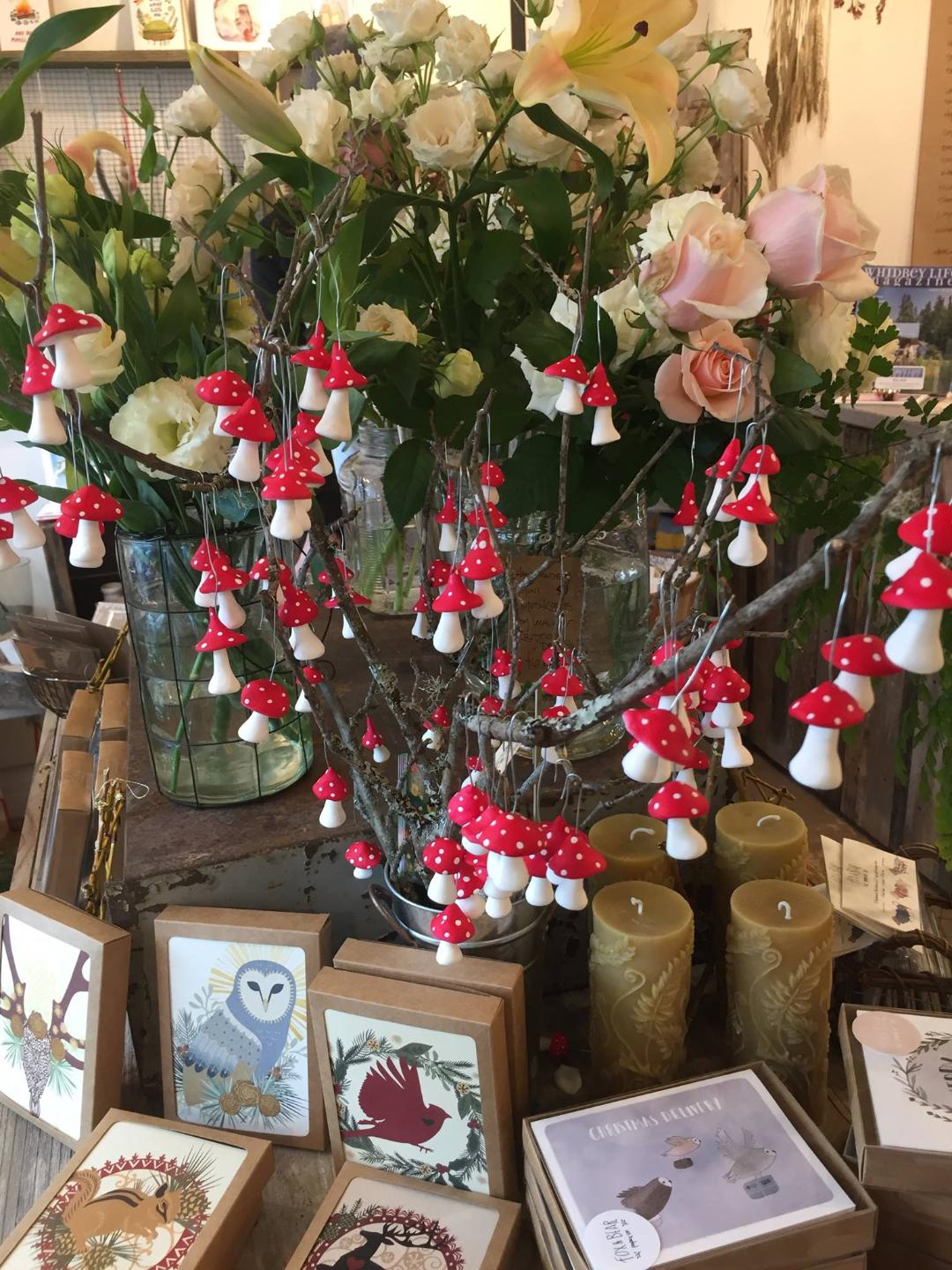
Day 7 was a collection of Lithuanian, Latvian and Estonian blogs, Facebook and Instagram pages, Pinterest boards, and other websites with spectacular Baltic landscapes and plenty of holiday cheer! Then we hopped up to Washington on Day 8 with artist Kristi O and her miniature mushrooms, a product of her creative talents and Estonian heritage.

Kristi O's mushrooms


Day 9 brought a collection of Baltic-inspired crafts. Then the essay “The Infinite Manifestations of Home” on Day 10 from contributor Ērika Veidis, a Latvian living in the United States. 

Ērika Veidis on the Infinite Manifestations of Home
Nine years of Yule dinner in Estonia, via Tulen Loobin Su Katusele Kive

Annika, of the blog Tulen Loobin Su Katusele Kive joined us on Day 11 with a photographic journey through nine years of Estonian Yule dinners. Then on Day 12 we welcomed Margaret of the blog Balt in the box room with her fish tale of the pitfalls of buying a carp for Christmas.

The pitfalls of buying a carp for Christmas, via Balt in a box room

On Day 13 of the series we welcomed Baņuta Rubess with her article Dec. 21: Lighten Up! concerning the Latvian tradition of pulling the log on winter solstice. Then on Day 14, An ode to verivorstid from another new contributor, Andres Simonson, courtesy of Estonian World.

An ode to verivortid!


On Day 15 we made tin can lanterns to celebrate the arrival of the Peace Light, the live flame that travels the world sharing its message of peace and hope. Then we discussed the similarities and differences of the Lithuanian and Latvian Christmas dinners on Day 16, comparing the food traditions of Kūčios and Ziemassvētki. On Day 17 we welcomed back contributor Kristīna, as she deciphered the mystery of candied cranberries; you can find her recipe for dzērveņu dzirksteles (cranberry sparks) here.

Kristīnas cranberry sparks

We journeyed into the world of Baltic libations with a miniseries during the third week of the series. Beginning with Lithuanian krupnikas on Day 18, then black currant liqueur on Day 19, and finally Tāle's Sunshine Coast Black Balsam recipe on Day 20!

Tāles Sunshine Coast Black Balsam
source: Wikipedia commons

On Day 21 we celebrated the winter solstice with a collection of resources concerning the traditions on this longest night of the year. Food blogger Isabelle from Crumb: A Food Blog joined the series on Day 22 with her post Debesmannā

Debesmannā via Crumb: A Food Blog

Finally on Day 23, we featured J. Daugirdas of Draugas News with his translation of Kalėdinė and the Magic Harmonica, the Lithuanian story of magical Kūčios night.


I hope you enjoyed the fifth year of 24 Days of a Baltic Christmas! We’re thankful to once again have been a part of your holiday preparations, and hope you found some Yule/Ziemassvētki/Kūčios spirit here on Femme au Foyer. I wish you and yours a very merry Christmas, and all the best in 2019.

Until next year,
Your Femme au Foyer

Sunday, December 23, 2018

Baltic Christmas Day 23 - Kalėdinė and the Magic Harmonica

The time surrounding the winter solstice is magical for the Balts; it was thought that on Ziemassvētki the animals could talk, and unexplainable things happen during the night. For example, in the Latvian Christmas story by Margarita Stāraste Barvika, everyday kitchen objects get a life of their own – the night holds a magic all its own. On the series a few years ago, Barbara Tedrow described her family’s Kūčios traditions, including reading Kalėdinė and the Magic Harmonica by Aloyzas Baronas. 

“My granddaughter Sophie snapped me out of my daydream. ‘Ouma, I’m ready for our reader’s theatre after dinner,’ Sophie whispered… Kalėdinė and the Magic Harmonica by Aloyzas Baronas was new to her. In the story, Kūčios was so special that at midnight the animals could talk. Sophie was doing her best to be patient, but the dinner celebration on the longest night of the year was turning into a personal endurance test…”

Today on 24 Days of a Baltic Christmas we are joined by J. Daugirdas of Draugas News. Having received a request for stories to read to children about the magic of the season, they published the short story written by Aloyzas Baronas, Kalėdinė armonika, along with a translation. Thank you to Draugas News for permission to publish an excerpt of the Christmas Harmonica!


A HARMONICA FOR CHRISTMAS

Aloyzas Baronas

Translated by J. Daugirdas

These events took place back in Lithuania. Kaziukas was small then and was not yet of school age. He would spend his days playing with his younger sister Elenutė. Some time before Christmas, Kaziukas’ Auntie brought him a gift – a beautiful ball painted with red and green flowers. Auntie warned him, “Kaziuk, you tend to lose your toys. If you manage to not lose this ball that I’m giving you, and don’t puncture or otherwise wreck it, for Christmas I’ll buy you a harmonica. “A real harmonica?” asked Kaziukas. “Yes, indeed,” replied his aunt, “A genuine harmonica, but a smaller one, just your size.”

Kaziukas promised to be good. He obeyed his parents, avoided teasing his sister Elenutė, did not throw any rocks at the rooster, did not pull the cat by its ears, didn’t ride the family dog Margis like a horse, and in general was on his best behavior, as he really needed this harmonica.

But then, just before Christmas, Kaziukas noticed that his ball was gone! He had actually grown tired of playing with the ball, and so it was only just before the holidays that he thought about it. He searched under all the beds and in all the nooks and crannies, but the ball was nowhere to be found! Kaziukas was in a panic. What would happen if Auntie found out that the gifted ball was no more? His Christmas harmonica would never be bought!

Still worrying about his ball, Kaziukas realized that it was Christmas Eve. Everyone was preparing for Christmas, but Kaziukas could focus on only one thought: now he might not be getting his harmonica, if Auntie found out that Kaziukas indeed did not take good care of his presents and toys.

On the day before Christmas, Auntie, speaking with Mom and Dad said, “Tonight, don’t forget to listen to what our horse will say, for on the night before Christmas all animals gain the gift of speech.” Mother said, “You’re joking, of course – I’ve never heard our animals talk!” Auntie was unfazed: “You didn’t hear them because you never listened. They do indeed talk.” “Tonight you’ll be able to listen to them,” smiled Father. “Then you’ll know for sure.”

Everyone laughed, while Kaziukas thought that maybe it would be worthwhile to go to the family dog Margis after nightfall and ask Margis if maybe he saw where his ball was Margis runs around all over the place, knows a lot, and has a keen sense of smell.

But to get out of bed in the deep of the night – is cold and frightening. Or maybe the cat would talk to him this night? The cat is always lolling about in the kitchen. But who would the cat talk to, as it spends most of its time alone? Although – perhaps the cat could speak to itself, like Auntie sometimes talks to herself? And is a cat an animal? Kaziukas’ mind was going ’round and ’round on this, and finally, he asked his mother, who was busily working around the stove. “Mom, is our cat an animal?” Mother answered while putting something into the oven, “What are you asking? Of course a cat is an animal. A small one, but an animal, nonetheless.”

After the Christmas Eve repast, everyone went to sleep except Kaziukas, who listened and listened. He waited until the clock struck the hour 12 times and then silently, he left his bed. The cold air doused him as if it were water, but on tiptoe he reached the kitchen. Next to the stove gleamed the green eyes of his cat. It appeared that the cat had been awakened by Kaziukas’ steps. Quietly, Kaziukas bent down and whispered directly into the cat’s ear, “Hey, cat, did you see where my ball went?” But the cat was frightened by Kaziukas’ unexpected moves. It jumped up and swatted Kaziukas’ on the cheek with its paw. Kaziukas jumped back, rubbing his face, which now was quite sore. Kaziukas tapped the cat on the head and, with a stinging nose, went back to bed. Kaziukas couldn’t fall asleep for quite some time. He was thinking: “I doubt that the cat scratched me deeply. Maybe tomorrow there won’t be any mark.”…


For the full translation, as well as the original Lithuanian tale, please see the Draugas News article, Aloyzas Baronas and the Christmas harmonica taleDRAUGAS (Friend) is a Lithuanian newspaper published in the United States since July 12, 1909, and is the oldest continuously published Lithuanian newspaper anywhere in the world. To learn more, please visit their website; you can find Draugas on facebook here.
  
Draugas News has also published an index of the 24 Days of a Baltic Christmas, with all five years of the series including titles and links to each article, listed by year. You can find the index here: Femme au Foyer – 24 Days of a Baltic Christmas.

As our countdown to Christmas draws to a close, we invite you to join us tomorrow on 24 Days of a Baltic Christmas for one final day of celebration!

Saturday, December 22, 2018

Baltic Christmas Day 22 - Debesmannā! (Latvian cranberry mouse)

This article originally appeared in December, 2013 on the blog Crumb. Reprinted with permission. Please welcome Isabelle Boucher to the series!


Secret Recipe Club: Debesmanna (Latvian Cranberry Mousse)


It’s hard to believe it’s already been a month, but yes, it’s Secret Recipe Club time again!

My assignment for December is Culinary Adventures with Cam, a blog by Camilla, a scuba-diving, jewelry-making, photo-taking mama from the Monterey Bay area.

I’ve been reading Cam’s blog for a while, after first discovering it through past SRC reveals. I admire her knack for finding interesting flavour combinations ( this delicious-looking Salted Fennel Pollen Shortbread), her seriously ambitious dinner party menus (I mean, look at this masterpiece of a Thanksgivukkah menu!), and her willingness to try new cuisines, no matter how obscure or unfamiliar they might be (I mean, did you even know there’s a place called Kiribati, let alone what they eat there? Because I sure didn’t.)


I hadn’t gotten around to cooking any of her recipes yet, though, so this was as good a time as any.

Cam has literally thousands of recipes to choose from in her archives, but the one that really caught my eye was the Latvian Debesamanna, a very simple cranberry mousse made from just three ingredients – cranberry juice, sugar and cream of wheat cereal. The trick is to whip the cooked mixture for several minutes as it cools, transforming the dark magenta sludge into an airy cotton-candy-pink cloud.


Cam used rice cereal for her version, but I decided to stick with the traditional cream of wheat, since I was pretty sure that the magical transformation in this dessert owes everything to wheat gluten – the elastic strands catch and hold the air as it’s being whipped in, much like the proteins in egg whites or the fat in whipping cream.

And, as you can see, my suspicions were right… it really does come out that brilliant shade of princess pink! (Honest, the colour in these photos is entirely un-retouched.)


It’s a surprisingly delicious dish, and totally unlike any dessert I’ve ever had before. Despite the airy texture that is nothing at all like the stodgy cream of wheat we all know and (kinda sorta) love, it still feels substantial and filling. It’s sweet and tart all at once, and the optional splash of milk adds a cool creaminess that helps to temper that tangy cranberry flavour.

I suppose a dollop of whipped cream on top might also be rather nice, if you wanted to dress things up, but I felt like keeping it simple, particularly since followed Cam’s advice and gobbled it down for breakfast.


I mean, when you think about it, as pretty and fluffy and pink as this dish might be, it’s still just cereal with fruit juice and a splash of milk. Right? :)

//

For Isabelle’s debesmannā recipe, please visit her blog Crumb. She can also be found on Facebook, Instagram and Twitter.

As we reach the final days of the series and are busy with the last Christmas preparations, I hope you find a moment here and there to relax, breathe deeply, and enjoy the season. Tomorrow on 24 Days of a Baltic Christmas we’ll bring you a holiday story from Lithuania – I hope you’ll join us!

Friday, December 21, 2018

Baltic Christmas Day 21 - Winter Solstice!

Today is the winter solstice, the shortest day of the year; add to that a full moon and meteor shower, and it is bound to be a magical night! Many seasonal Latvian traditions originated in the ancient pagan celebrations of the winter solstice, and over the centuries these old pagan traditions not only survived, but have been incorporated into the Christian celebration. From pulling the log to decorating the house, we’ve compiled a list of resources of things you need to know to usher in the New Year and herald the return of the sun!

Photo: Wikipedia commons, credit Spekozols

To ward off the darkness, cold, last year's mishaps, bad work and thoughts, people pull a Yule log from one farm to another and then burn it, symbolizing the beginning of a new year. Baņuta gives us the details in her post Dec. 21 – Lighten Up!, and the article Day 22, Winter Solstice features additional options for the bluķa vilkšana. For those living in the city, the Light 'n Go Bonfire Logs from Home Depot are from the Baltics, burn quickly, and have handy pre-cut slots. 


In ancient Latvia, Ziemassvētki celebrated the rebirth of the Sun Maiden. Traditional celebrations included participating in ķekatas (also known as budēļi kaļadas, similar to mumming), when people dressed up costumes and went from house to house singing, dancing, and playing games. The traditional costumes varied, but popular choices were animals such as a horse, bear or crane. The ķekatas are believed to bring luck to the households that they visit, scaring away evil spirits in the process with the loud singing and carousing, and are warmly welcomed with food and drink. More on the budēļi tradition in Imanta’s post A Baltic Christmas Day 4 – Čigāni!


The saimnieks and saimniece at each house would treat the guests – whether they be ķekatnieki or log pullers – with food and drink. One traditional food that was served was the pig’s head; learn to make your own with the article A Pig’s Head for a Winter Solstice Dinner.

Christmas and the winter solstice is traditionally a magical time in all three of the Baltic countries, and nowhere is this magic more evident than in the natural world and the Baltic customs surrounding animals. Read more about these traditions in the post Christmastime Animal Stories and Superstitions.

It is also a time for fortune-telling, merrymaking and games. Here Daina discussed the role of ziemas saulgrieži in her holiday celebrations: Day 16 and the Winter Solstice

Daiva addresses some of the Lithuanian traditions in her article Lithuanian Pre-Christian Rituals and Superstitions in Today’s Catholic Celebration


May you have a wonderful winter solstice celebration, and please join us tomorrow for debessmannā


Related Posts Plugin for WordPress, Blogger...