Friday, July 28, 2017

Five on Friday: the August edition

It’s hot. With temperatures in the mid-90s for the past week, I don’t think I’m the only Upstate mom that has been spending more time indoors. While we’ve been enjoying our time at the library, The Children’s Museum of the Upstate, Summer Movie Express $1 movies and on the couch at home watching TV (shhh, don’t tell!), we’ll be making the effort to get out to cross some last things off the summer bucket list before school starts this month. Now if only we could get temperatures to drop under 90 for a week or so, that would be great.

1. The Carolina Panthers return to Spartanburg! The Panthers kicked off their training camp at Wofford College Wednesday with a kickoff party, and practice will continue through mid-August here in the Upstate. For more on what to expect, check out last year’s post, Carolina Panthers training camp. For a training camp practice schedule, please visit the official team page.


2.  Every Friday night the Roper Mountain Science Center hosts two showings of their feature show Eclipse: The Sun Revealed in the newly renovated T.C. Hooper Planetarium. Learn about the historical and cultural view of eclipses, the geometry behind them, and how to safely view one in preparation for the total solar eclipse that will take place on August 21st. Starry Nights at RMSC have never been more exciting! For more information and for tickets please visit the RMSC Starry Night website, and for a review of the show please see my post on Starry Nights. Bonus: Hooper Planetarium is air conditioned…

3. The Indie Craft Parade is coming back to Greenville for the 8th year this September, and tickets go on sale August 1st! The three-day festival celebrates handmade art, and has become one of the premier Southern craft events showcasing quality southern-made goods. Read about it here, buy tickets here.

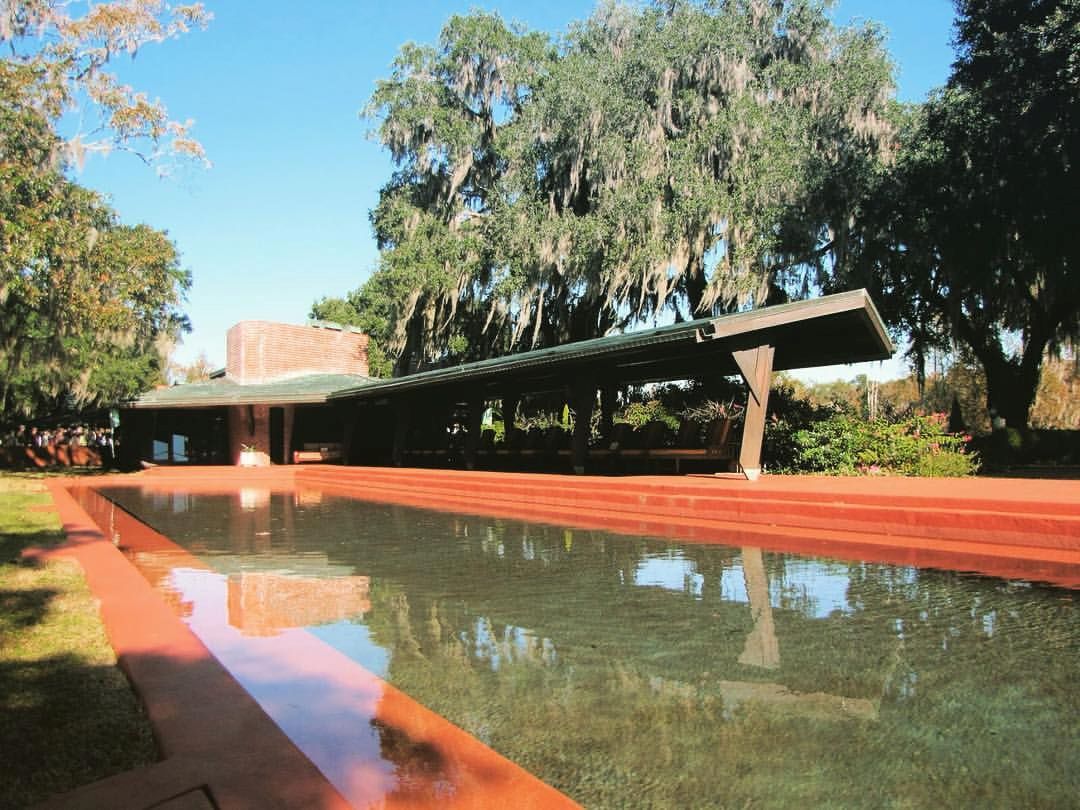
4. This next event requires a bit more of a commitment, but it is a once-in-a-lifetime opportunity to explore one of the two Frank Lloyd Wright properties in South Carolina, and his only plantation – Auldbrass. The estate is only opened to the public every other year on one weekend in November, and online ticket reservations are opening August 1st. Warning - the tickets sell out quickly! For a picture tour of Frank Lloyd Wright’s Auldbrass please visit my post on the subject, and for ticket reservations visit the Open Land Trust website.

5. A public service announcement: The $10 lifetime National Park Service senior pass for U.S. citizens age 62 or over will increase to $80 on August 28, 2017. Although still a good deal in my opinion, if you’re not already a lifetime pass holder, you might want to take advantage of the lower rate by visiting a federal recreation site before the end of the month. If you would prefer to buy online from the USGS store, or by USPS, there is an additional charge of $10 for processing the application. The passes are valid at more than 2,000 Federal recreation sites where entrance fees are charged. The National Parks centennial has passed, but our public lands need our support now more than ever!

Stay cool,
x Femme au Foyer

Wednesday, July 26, 2017

The Ecology Lab at RMSC

Second Saturdays are the perfect time to get out to the Roper Mountain Science Center, located right here in Greenville! On the second Saturday of select months, the learning spaces throughout the science center are open to the public, offering visitors an opportunity to enjoy experiences similar to those which engage students during the weekday lessons held in the center’s classrooms and labs. The Living History Farm, the Planetarium & Observatory, the Symmes Hall of Science... In addition to special activities geared towards that Saturday’s topic, there are also plenty of resident animals to meet and exhibits to explore - and if you’re a RMSC member, it’s free!

Red Eared Slider

Our favorite summer stop on Second Saturdays is Harrison Hall of Natural Sciences, and during the recent Blueberry Festival we spent some time exploring the Ecology Lab. Located right next door to the Marine Lab, the Ecology Lab showcases South Carolina habitats from the mountains to the sea. Oriented like a classroom, the center of the room is filled with long tables and chairs; on the Second Saturdays these are often filled with crafts and activities. The Butterfly Adventure was in its final day, and so thousands of butterflies had been created at one station to form an enormous hanging work of art that fluttered in a corner.


Four large “Living Habitats” line the far wall: a Mountain Trout Stream, a Beaver/Turtle Pond, a Cypress Swamp (with alligator), and a Salt Marsh. Murals, faux rock work, and aquariums with live animals & plants showcase these habitats, while a fifth terrarium with carnivorous plants highlights our Carolina Bay habitat.


Along one end of the lab is a mural of a forest, and a large window overlooking the pollinator garden which is often buzzing with the resident bees. A bench faces the window, offering a quiet place for observation.This is also where the live indoor honeybee hive is located; this brand new hive was installed in June of this year as an Eagle Scout project, replacing an older display without the convenient feeding station of the new one. The full pollen sacs on legs of bees returning from their foraging were clearly visible, and we watched in fascination as they performed the waggle dance, the figure-eights that instruct the rest of the hive where to find a food source. 


Meanwhile the other end of the lab has the Invertebrate Zoo, which displays native and tropical invertebrates. On Second Saturdays there is usually a volunteer, or two, who are more than willing to help answer any questions visitors may have; in our case it was concerning large snakes of the Upstate…


With the ‘don’t touch’ policy many science museums enforce with their exhibits, it is wonderful to see the hands-on approach that Roper Mountain takes with the Ecology Lab. In addition to the ‘touchable’ aspect of the Living Habitats (small doors to open to find answers to questions, and models of various animals) the Lab has an “In Touch with Nature Table” that allows kids (and adults!) to hold real artifacts; a snake skin, turtle shells, pieces of coral and seashells were scattered amongst beaver-gnawed branches, pine cones and various other objects found in the great outdoors.


Soon enough the kids had their fill and we headed outdoors to see what was new in the butterfly garden. The Living History farm also beckoned, but it was good to know that on such a scorching hot day we could always return to the cool labs of the Harrison Hall of Natural Science. For more information on the Second Saturday events at Roper Mountain Science Center (the next ones are scheduled in October and November) please visit the RMSC website, which will also have admissions info and hours. Remember, if you’re a member not only do you get free admission to Second Saturdays and Starry Nights, but you also gain admission to over 300 science centers and museums worldwide – for membership info click here and join the RMSC community today!


Monday, July 24, 2017

The Swamp Rabbit – from Furman to the Swamp Rabbit Café

It was a sunny day, albeit without the heat that has plagued the Upstate for the last month. We loaded up the bicycles and headed north to Furman with the goal of hopping on the Swamp Rabbit Trail for the day. Our goal was to bike the 4 miles from the south end of the Furman campus all the way to the Swamp Rabbit Café & Grocery (SRC&G), eat lunch, rest, and then make the return trip - for a total of 8 miles.


There is parking at both ends of this section of trail, though the dirt lot off Duncan Chapel Rd. is on the small side when compared to the extensive trail parking available at SRC&G. If the lot is full, try the visitor parking lot at the Trone Student Center on Swan Lake – it’s just another ½ mile north. While we unpacked the bikes the boys explored, admiring the old rail car to the side of the trail that pays homage to the trail’s origins as a rail line connecting Greenville with Travelers Rest. The trailhead also features a convenient map, water fountain and vending machines. 


For more on Furman and Swan Lake, please visit my post A Lake Hike at Furman University

Headed south you'll pass milepost 27.5, a small clearing with a picnic table, and then milepost 28 before coming to Watkins Bridge Road. Here the trail meets up with the Reedy River, mostly staying within a stone’s throw all the way to the southern terminus in Lake Conestee Nature Preserve. After crossing Watkins Bridge Road it’s smooth sailing; a straight, level, shaded cruise until you hit milepost 28.5 where the trail gets a lot more urban, with backyards and power lines paralleling the path. Right before crossing Little Creek there is a little wooden structure on the trail, providing room to pull off for some shade and a view of a small meadow.


After the Little Creek bridge there’s another pull-out, this one with concrete benches, a table and some rose bushes to sweeten the ride.


Milepost 29 marks the beginning of a not-so-scenic stretch, industrial/automotive businesses and fences on both sides. However not too much further and you’ll spot the green boxcar of Swamp Rabbit Station and you’ll know you’re halfway to SRC&G. I was happy to see that the pocket park is coming along – the Berea Community Mural Project dedicated “Looking Back” this past May.


For more on this pocket park, please visit my post Swamp Rabbit Station

The next portion parallels power lines and has less shade, but is pleasantly green and has various trees and shrubs planted alongside that will eventually help cool down cyclists. We cruised past the 29.5 milepost and before we knew it were back in the woods. The next mile is pleasant enough, shade and woods to both sides; we hit milepost 30, then 30.5.


Immediately after crossing Langston Creek the trail intersects with W. Blue Ridge Drive. We walk our bikes across all the road crossings on this section of the SRT as they involve wide roads that see quite a bit off traffic, but luckily there aren’t all that many roads to cross…

The last ¾ of a mile (from W Blue Ridge to Cedar Lane Rd.) passes by quickly. More power lines, then another short wooded section, with a Swamp Rabbit Grocery sign and then milepost 31 to let you know you’re almost there. The Reedy River has been to the right ever since crossing Watkins Bridge Road, but here you’ll cross over to the other side of the river, emerging to a large grassy area and an abandoned warehouse. It’s advised to decrease your speed as you maneuver the trail under Cedar Lane Road, but upon emerging on the other side you’ll see the Swamp Rabbit Café and Grocery to your right.


In addition to a map, bicycle racks and restrooms, SRC&G is home to the Swamp Garden (an excellent natural play area for the kiddos), the new storage-container-turned-pizza-place, and of course the restaurant and grocery. The opportunity to purchase a refreshing King of Pops or enjoy a locally sourced lunch is definitely one of the benefits of cycling this section of the Swamp Rabbit Trail. Other positive aspects: there’s relatively low traffic on this section and it’s pretty level in elevation. Two drawbacks to this portion of the trail are the road crossings and the slightly monotonous scenery. Having rested, consumed a Swamp Pizza, and played in the Swamp Garden, we hopped back on our bikes and hit the trail north, back to Furman.

Related posts:


Crossing the Reedy River Bridge

Friday, July 21, 2017

On how to retire an American flag

I wrote Wednesday about our visit to Fort McHenry, the birthplace of our National Anthem. While composing the post about the “Star-Spangled Banner” I was reminded of our recent trip to Chester State Park, where we had the honor of attending a Flag Retirement Ceremony.


The United States Flag Code states, “The flag, when it is in such condition that it is no longer a fitting emblem of display, should be destroyed in a dignified way, preferably by burning.” I knew that when a flag becomes worn, torn, faded or badly soiled, it is time to replace it with a new flag, and I also understood that the old flag should be "retired" with dignity and respect. However, I had never before witnessed the incineration of a worn flag, and didn’t know that the Boy Scouts of America accept old flags for retirement.


The simple ceremony was dignified; a solemn and respectful ritual that all three of my boys learned a great deal from. We had discussed earlier that they will have to be as quiet as they can manage during the service, and Lauris wore his Cub Scout uniform for the occasion. We gathered around a fire that had been specially stacked and lit for the occasion, and when darkness fell the Scoutmaster and Scouts proceeded to follow a Flag Retirement Ceremony script. If you are interested in sample ceremonials, you can find various examples here and here.


The goal is to completely incinerate the flag; the Scouts maintained a vigil over the fire until all traces of the flag remnants were destroyed, and only then was the fire extinguished. The following morning only grommets remained as a testimonial to the formal observance that had taken place there the previous night. The Cub Scouts and their younger siblings each chose one to remind them of the ceremony and all it stands for, and then the ashes were buried. I also kept a grommet, as well as a few photographs to serve as a memento, though the memory of the brilliant colors of mingling flames and Old Glory will be with me each time I see the Star-Spangled Banner flying high.


A couple of questions I had that were answered by the Scoutmaster and a little research:
How do you know your flag should be retired?
If possible, mend a tattered flag at early signs of wear, but if the flag is unable to be repaired or is too tattered then the flag should be retired.
Who is authorized to retire a U.S. flag?
There are many local organizations that will take your flag for proper retirement, including (but not limited to) the Veterans of Foreign Wars, the American Legion, Boy Scouts of America, Girl Scouts of America and the Marine Corps League. However, the Flag Code does not authorize any one organization with this duty - any one person or group can retire a flag.

And a few recommended precautions:
- When burning flags made of synthetic fibers, be aware that they may burn quickly and even emit noxious gases. 
- It is important that the fire be sizable in order to ensure complete burning of the flag, yet one should take precautions against bits of the flag being carried off by a roaring fire.
Make sure the fire is safely extinguished before leaving the location.
- Some communities/municipalities have regulations prohibiting open fires. In this case it is suggested to turn to a local organization that accepts flags for retirement.

Wednesday, July 19, 2017

A Star-Spangled Fourth of July at Fort McHenry

Every so often our vacation plans align with the calendar in such a way that what would have already been an incredible experience becomes extraordinary due to the perfect alignment of date and place. Such was the case with our Veterans Day trip to Normandy, which included stops at Omaha Beach and the American Cemetery; it was a somber and emotional experience which has given new meaning to our Veterans Day remembrances. Our recent trip to Baltimore coincided with the 4th of July, and I immediately realized this would be another one of those occasions; Fort McHenry is the birthplace of the American anthem!


Many people don’t realize that “The Star-Spangled Banner” wasn’t written during the American Revolution, and fewer still can name the war that inspired the words we all know by heart. It was the events of the Battle of Baltimore during the War of 1812 that prompted Francis Scott Key to write the poem that is today our National Anthem, and the Fourth of July was the perfect day for a visit.

Star-shaped Fort McHenry in center, visitor center next to red pin

A week before the battle, a young lawyer set sail from Baltimore along with Col. John S. Skinner, US Commissioner General of Prisoners. They were on a mission to gain release of a prisoner, Dr. William Beanes, and reached the British fleet on September 7th. After a few days of negotiations on the waters of the Chesapeake they had arranged for Beanes to go free, but because during this time they had learned of the British plan to attack Baltimore, they were detained.

View from bastions over harbor, Francis Scott Key Bridge on right in distance

Washington had already burned, but Baltimore was better prepared due in large part to Fort McHenry’s defensive position guarding the entrance to the harbor. The British attacked the Fort from the water at dawn on the 13th, simultaneous to an attack on the east side of Baltimore. 25 hours later, after some 1,500-1,800 shells and rockets, the bombships withdrew down the river. As the British sailed away the Americans fired the morning gun, hoisted the Star-Spangled Banner and played Yankee Doodle.


Fort McHenry served as an active military post for the next 100 years, although it would never again see enemy fire. A temporary prison for Confederate soldiers during the Civil War and a hospital for WWI veterans from 1917-1923, the Fort became a national park in 1925. Today it is a national monument and historic shrine, the only park in the United States to have this distinction.


The Fort is accessible by harbor ferry, but we opted to drive, passing through Federal Hill and out through Locust Point. We had sailed past Fort McHenry in the dark a few nights ago on our Spirit of Baltimore cruise, a journey that brought us all the way to Francis Scott Key Bridge, the approximate location Key would have watched the bombardment from (about 4 miles out). Fun fact; the British had a range of about 2 miles with their mortars, while the Americans were effective only 1 ½ mile with the Smoothbore artillery. However the Americans only suffered two casualties – a result of a direct hit on the southwest bastion.


Start your tour of Fort McHenry in the Visitor Center. After paying admission and picking up Jr. Ranger booklets we headed into the museum where the film soon started. This was one of the highlights of our visit; as the movie ended the Star-Spangled Banner sounded out from the speakers, the enormous screen rolling up to reveal the Fort with American flag flying proudly directly behind. The words of our anthem came to life, watching the fort and flag revealed in a similar fashion to what Francis Scott Key would have seen in the early hours of September 14th. After jotting down notes aboard the truce ship, Key returned to Baltimore and wrote a poem titled "Defence of Fort McHenry." Published the next day, it was soon sung to the tune of "To Anacreon in Heaven" and is now known as "The Star-Spangled Banner." 


From the Visitor Center we headed out into the heat of the day to explore the fort. During the bombardment the guns were manned by 60 artillerymen – the remaining 70 were sick, had deserted, or were under military guard. We entered through the Sally Port, passed the Civil War guardhouse, and one by one explored the barracks, the officer’s quarters, the powder magazine and finally the bastions under the flag waving crisply in the harbor breeze. The original flag (which measured 42 by 30 feet) that inspired Key was made by Mary Pickersgill, and today is displayed in the Smithsonian Institution's Museum of American History in Washington, D.C.


A second highlight of the Fort McHenry trip was watching reenactors fire a cannon. As commands were issued and orders followed, the whole firing process was explained to the spectators. Afterwards visitors could get an up-close look at the weapon and ask questions. We continued our tour by descending to the sea wall, circling the peninsula and enjoying the view of the harbor, before finally returning to the visitor center and starting our journey back to South Carolina.


The Fort had a special schedule of activities on our visit in honor of Independence Day, but normal summer activities include daily flag changes, interpretive programs, living history features and of course, the self-guided tour of the star fort and grounds. Fort McHenry is also on the Star-Spangled Banner National Historic Trail (which tells the story of the events, people, and places that led to the birth of our National Anthem), and is located in the Chesapeake Bay Gateways Network and the Baltimore National Heritage Area. For more information about the fort, operating hours, special events, fees and more, visit the official Fort McHenry National Monument and Historic Shrine website.


Related Posts Plugin for WordPress, Blogger...