Monday, June 16, 2014

What is permaculture?

Still a newbie in the gardening discipline, I recently stumbled onto a group here in the Upstate that has been a real eye-opener to gardening in relation to community and sustainable living. Through South Carolina Upstate Permaculture Society (SCUPS) resources I have gained new appreciation for Southern gardening, as well as inspiration for my garden and our life here in the Upstate. My vocabulary has grown as well; I had not even heard the word “permaculture” until a discussion with friends last year.

Permaculture is a systematic method of ecological and environmental design that develops sustainable systems modeled after natural ecosystems. The term was first coined by Australians Bill Mollison and David Holmgren in 1978 and originally stood for permanent agriculture as a sustainable farming philosophy. To me it means sustainably utilizing local resources including our physical yard and neighborhood, as well as the knowledge, seeds, plants and materials within our community.

Lucky boys were in charge of gathering eggs from the neighbors coop for a week!

SCUPS was started by Eliza & Nathaniel Lord. Eliza is a self-proclaimed “proud sustainahilbilly, urban farmer & blogger” who runs a ¼ acre urban farm in downtown Greenville with her family. In addition to organizing urban farm tours & open houses and managing the blog Appalachian Feet, she also teaches classes, many of which are taught just down the road at the Swamp Rabbit Cafe and Grocery. I had the privilege of briefly meeting Eliza during their recent “open garden,” as well as taking a tour of their incredible urban farm.


Another new vocabulary term - “hugelkultur.” Basically a raised bed filled with rotting wood, the website www.richsoil.com describes the benefits of this method of gardening – “This makes for raised garden beds loaded with organic material, nutrients, air pockets for the roots of what you plant, etc. As the years pass, the deep soil of your raised garden bed becomes incredibly rich and loaded with soil life. As the wood shrinks, it makes more tiny air pockets - so your hugelkultur becomes sort of self tilling. The first few years, the composting process will slightly warm your soil giving you a slightly longer growing season. The woody matter helps to keep nutrient excess from passing into the ground water - and then refeeding that to your garden plants later. Plus, by holding SO much water, hugelkultur could be part of a system for growing garden crops in the desert with no irrigation.”

Hugelkultur beds in action

The Lords had some great examples of hugelkultur on their property, along with a number of other demonstrations of the application of permaculture to city living. These are just a few:
Lawn-free edible landscaping
Unusual perennial food crops for the southeast
Water catchment swales in pathways
Edible mushroom farming
Pallet gardens
Farmscaping (organic pest control through hosting a complete ecosystem)
Chickens, chicken coop, & run
Black soldier fly waste composting and chicken feed
Worm bin and cold composting
Bee hives
The beginnings of what will be a duck run and pond

I found a few of their approaches to gardening in this area applicable to our yard, and although I don’t see adding a chicken coop, duck run or beehives to our backyard anytime soon, I do see incorporating more local species to attract pollinators, as well as possibly building additional raised beds to accommodate more plants. I also hope to become a bit more active in SCUPS, and not just watch their activity on facebook but also participate in some of the permablitzes (a talka where a large group comes together to help permaculture someone’s site) and meetings.

There was talk of possibly re-queening, to gain a more peaceable hive

Also on my mind are several other permaculture concepts, such as rain barrels and gardens. Recently a subject to come up repeatedly in local news are rain gardens, areas planted with native species meant to absorb rainwater runoff from impervious urban areas like roofs, driveways and parking lots. Discussions among friends have brought up topics like foraging, with many of the local parks and forests home to pecans and mulberries that would make for some fun excursions in the right season. And settling into our home has prompted me to think about how best to utilize several areas of the garden that don’t see much traffic, but would be perfect for more food plants with just a little work on soil quality.

Yesterday's harvest - tomatoes and basil were tossed with oil and mozarella for a fresh salad, squash and a zucchini baked with herbs for a side

As I’m hardly an expert on permaculture or any of these topics, I suggest you instead turn to Eliza Lord’s website Appalachian Feet, an invaluable resource on permaculture, here. You can join SCUPS by searching facebook for “SC Upstate Permaculture Society” and requesting an invitation. I found easy-to-understand information on hugelkultur here. And finally a virtual tour of the permaculture-setting example of a garden right here in Greenville can be found here. 

Thank you to the Lord family for the tour of their farm as well as patience in answering my questions, and for their gracious permission to share my photographs of their gardens in this space.

Friday, June 13, 2014

The South Carolina Botanical Gardens

Forty-five minutes west of Greenville is Clemson, home not only to Clemson University, but also to the South Carolina Botanical Gardens. At just under 300 acres, the Gardens encompass everything from natural landscapes to display gardens, with miles of streams, nature trails and the 70-acre Schoenike Arboretum. Home to over 300 varieties of camellias, the Gardens also have an extensive collection of hollies, hydrangeas, magnolias and native plants. But in order to best enjoy this State treasure, visitors should stop in the Pot Belly Deli for lunch first.


Our sandwiches and wraps were filled to the bursting with toppings and flavor, and the atmosphere was family friendly, especially for a college town. Upon entering you order at the counter and pay at the register before heading to claim a table, where your meal will be brought to you once prepared. The boys polished off a freshly-baked bagel, and the fresh deli fare made it clear that PBD is no chain, but instead a local destination. Vegetarian cuisine is available, along with salads and hot meals. 

Fortified for a day in the gardens we cut across campus and parked in the lot off Pearman Boulevard closest to the Heritage Garden. The first area visitors coming from this entrance will find themselves in is the Cadet Life Garden, which commemorates a special period in Clemson history. Not many people know that Clemson University used to be one of seven military colleges in the country. All the students wore uniforms, attended military classes, practiced military drills, lived in barracks, marched to meals in a common mess hall, and most attended military summer camp at a US Army post - all the while working towards a college degree in their chosen field. Most were commissioned as officers in the US Army Reserve Corps on graduation, and many saw active duty with the military in foreign wars. During those sixty years (until 1956), 12,314 students graduated, nearly 10,000 became Reserve Officers, about 5,600 saw active military service, and 335 died or were missing in action while fighting for their country. (From informational plaques in the Garden).


Following the shaded pergola NE will take you to 1939 Caboose Garden. (Although make sure to stop and relax on one of the swings on your way; tucked into recesses they can be a handy hiding spot from the world, or your two noisy boys.) George Williams, Assistant Vice President and Treasurer of Southern Railway (as well as graduate of class of ’39) donated the caboose which was repainted red, transported to its current spot and furnished with interior finishing and memorabilia.


Meandering through the Heritage Garden, we slowly made our way to the Children’s Garden. With greenhouses, a “Food for Thought” Garden, Peter Rabbit’s Garden and other interesting spaces, the boys found plenty to explore. The food garden provided me with pinterest-style inspiration for our own garden, as well as confirmation that we aren’t the only ones using old pallets as gardening implements. The Peter Rabbit Garden featured a cute little playhouse, and although the greenhouse was near empty, one can imagine that the contents had been recently transplanted outdoors into the gardens.


Adjacent is the butterfly garden, where quite a few butterflies were actually fluttering about, even in the midday heat. I was especially impressed with the pitcher plants, and the boys spotted one or two flowers that we have growing in our garden. There were also many similarities between this garden and the Roper Mountain Science Center butterfly garden that we have just a few minutes from home. 


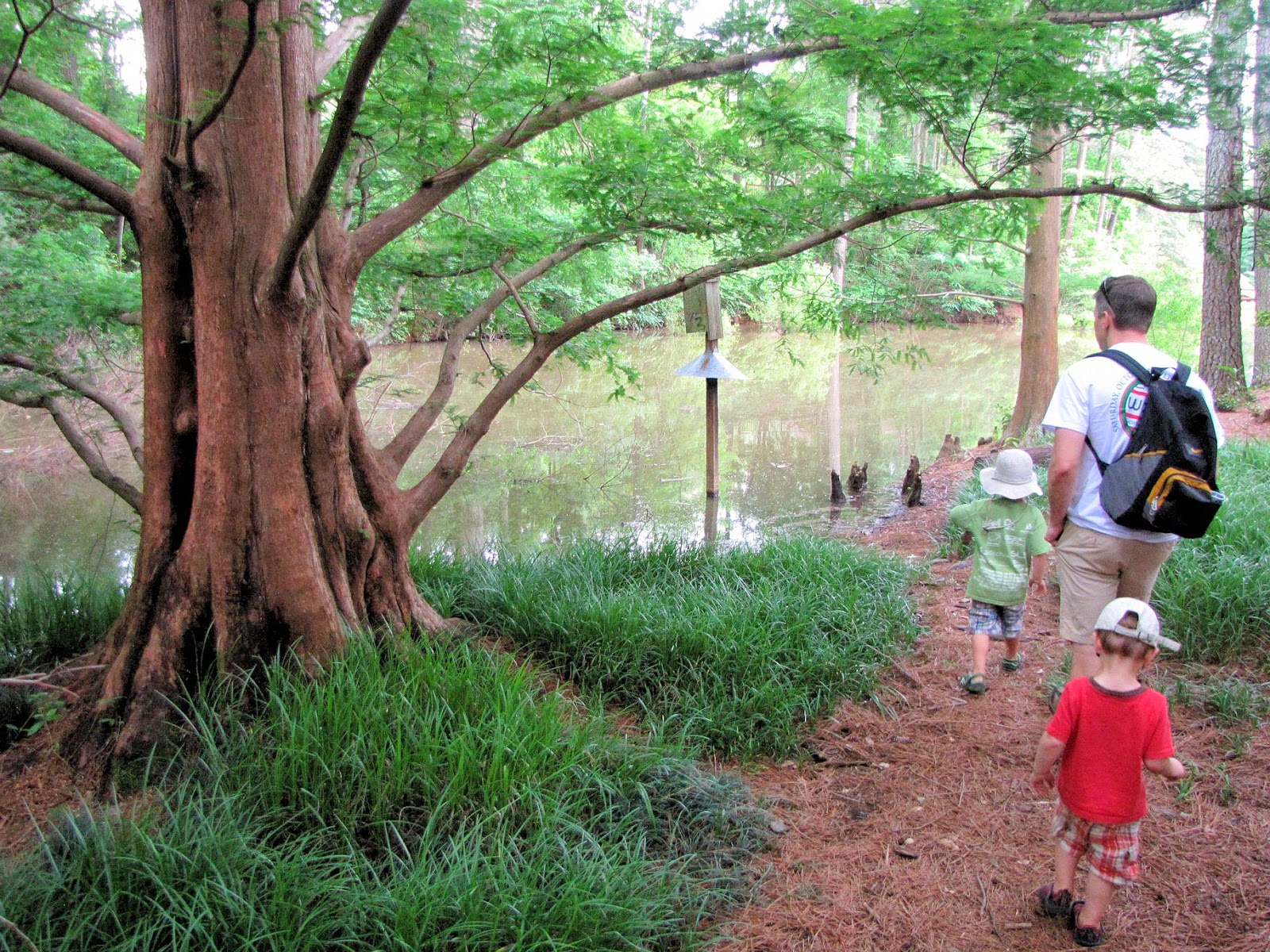
We circled around Duck Pond on a nice wooded trail that took us around to Camellia Trail. Benches scattered here and there allowed for chances to stop and rest, have a snack and enjoy the view.


We detoured to the Flower Display Garden to see what was blooming, but the boys were more interested in mud puddles and so we soon continued on.


Although there were miles and miles of trails left to explore, we decided to save those for another time. After returning to our car we headed further through Kelly Meadow to the Fran Hanson Discovery Center & Gift Shop. Built in 1998 as "The Wren House," it was the first Southern Living Idea House, designed by architect Keith Summerour and garden designer Ryan Gainey. The cactus gardens between the house and the Campbell Geology Museum are amazing, and provide a stark contrast to the lush, green gardens around the Wren House. We didn’t make it to the art galleries on the second floor that showcase local artists, nor did we venture further to the arboretum just beyond the parking lot; instead, we loaded up and pointed the car back towards home, with one final destination in mind…


No summer road trip is complete without ice cream, and our quest for a cold treat took us back to the Clemson campus. Located in the Hendrix Student Center, the ’55 Exchange is a student run enterprise created in 2005 by the Class of 1955. In addition to ice cream, shakes, smoothies and coffee chillers, one can also buy the famous Clemson blue cheese there – previously mentioned in my post about Stumphouse Tunnel, where the cheese was originally cured.


Truly a State treasure hidden away in a corner of the Upstate, the SC Botanical Gardens are a must-see destination for visitors to the Upstate. No matter the time of year or your interests, I encourage you to go for a hike and discover the Gardens for yourself!

Wednesday, June 11, 2014

The New Yorkers in Greenville

I think it’s about time I wrapped up the New Yorker’s visit! Once again, we managed to jam a ton of stuff unto a couple of days: the Willie Nelson concert and Artisphere being at the top of the list. A priority that weekend however, was to celebrate Lauris’s fourth birthday. Not to be left out, Mikus also celebrated his second birthday, which was four months ago…


Another highlight might have been our breakfast at Waffle House. Breakfast of champions, right?


Of course to work off that meal, we spent lots of time in the backyard; playing football, splashing in the pool, lounging around in lawn chairs… Check out this video of the boys getting their exercise!


Mikus got some time in with his godmother, I got spoiled a little by having all the extra help, and Roberts had some help drinking those beers in the fridge. Win/win?


Of course there were tears shed when it came time for A² to head back to NYC, but at least we had this weekend (and I guess I have to thank Willie for that?). Maybe the jetsetters will make it back to Greenville once the baby is born…


And of course once our guests left, back to work!!!


Monday, June 9, 2014

Touch a Truck


The first “children’s event” (I guess I need to add the disclaimer “with children”) I attended here in Greenville was four years ago. My sister Anna had come into town to help this brand new mom while Roberts was away on business, and we had decided to get out of the house on a Saturday morning to go to the downtown farmer’s market. Every year on the first Saturday in June the City of Greenville puts on Touch-a-Truck at the Saturday Market. This is a great opportunity for kids to get up close and personal with a bunch of trucks and city vehicles, most of which are open for exploring.

Then and now - Lauris at one month old and the boys this past weekend

The trick to this free event is to get there early. The market opens at 8:30 am, and that’s when we timed our arrival. By 9:30 the lines to climb into the various trucks and machines had grown, and by 10 the two block stretch of McBee Ave. was crowded.


It took about an hour and a half to check out all the participating vehicles, although we did skip one particularly long line, that for the SC Farm Bureau Federation AG Combine Simulator. The interactive educational unit allows users to harvest virtual row crops in the cab of a real agricultural combine, and I’ve heard it’s very lifelike. This might be on the list for next year, when the boys are just a bit older.


The most educational vehicle might have been the Greenville Water sewer line van, equipped with hoses fitted with cameras that run deep underground to solve blockage problems. The boys liked the army truck better. Possibly associated with the National Guard, it was a large camouflaged troop carrier, similar to the SWAT truck that was equipped to carry 22 people (mostly hanging off the sides). I was more a fan of the fire engine. Good thing the emergency brakes were on when Mikus stepped on the gas…


Most of the participating trucks were City of Greenville vehicles. If I could make a suggestion to the 2015 planning committee, it would be to get a little more variety in; a garbage truck would be a great addition, and I think the boys would really enjoy seeing a cement truck up close. Definitely keep the excavator!


Clambering into, onto, around and on top of almost 20 vehicles really tired the boys out, and they were ready to head home to wake up dad. We stopped in the market to pick up some garlic dill chèvre from Spinning Spider Creamery, and then we were off towards home, both boys talking a mile a minute about all the different trucks they had driven that morning…


Friday, June 6, 2014

Artisphere with the New Yorkers

Of course, my sister and Andrejs didn’t fly to Greenville only for the Willie Nelson concert. It just happened to be a certain someone’s 4th birthday, and although we had celebrated with vecmamma Inga and a group of friends a week earlier, A² being here enabled us to stretch the celebration out for an entire week. We kicked everything off with the concert in Simpsonville, but the next day was spent at the annual Greenville art and culture festival, Artisphere.


We attended with the grandparents last year, but as the artists performing and exhibiting their work change from year to year, we were guaranteed to have a novel experience. We started in the Kidsphere, where I got busy with the boys while the rest of the crew took a short look around. This year’s activities included paper hats, butterflies, puzzles, a building area (utilizing Roylco straws and connectors) and stained glass frames. Lauris enjoyed the stained glass, but the hit was the building area. I had not seen these straws before, but now we have a big box at home (thanks ZAIG!) and they are genius! There are variations as well, for example a different brand has dozens of different connector styles that aren’t limited to 6 connections, but the boys will play with them for a good hour. That day at Artisphere was no exception, we had to pull them away.


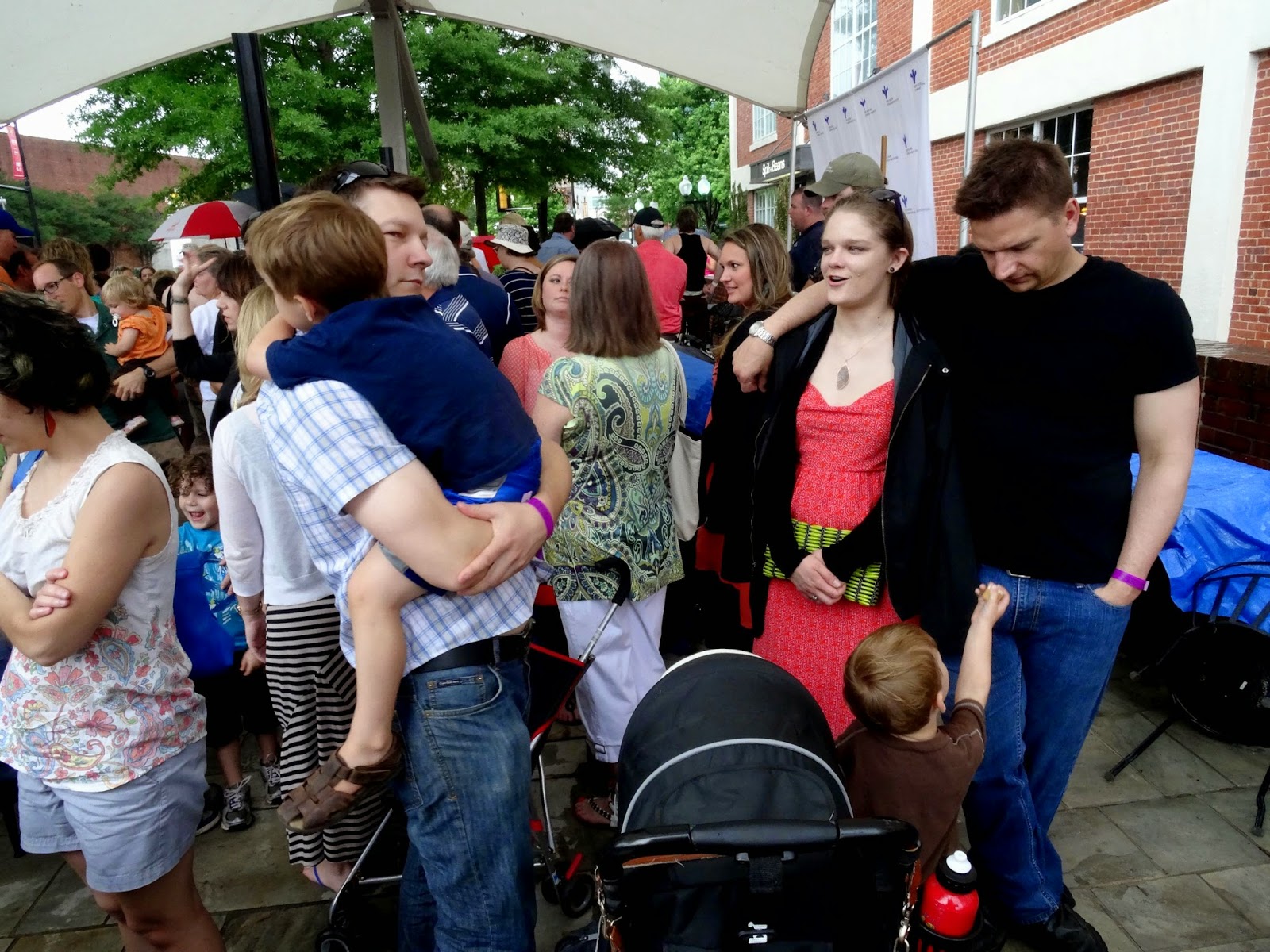
The original plan had entailed making a beeline for Spill the Beans and then slowly working our way back up Main Street, but as they say about the best laid plans… Half the crew enjoyed a demonstration in the plaza while I waited in the super-long line for ice cream and the rest of the group checked out the scene, but no sooner had the boys finished their ice cream than we got caught in a deluge. We took shelter under the Tate Plaza canopy along with everyone else who was in the immediate vicinity (including the aerial artists that had been up on their rigging when the downpour started), and waited out the rain. Luckily it didn’t last too long, and once it was down to a drizzle we dashed across the street and made our way down to Papi’s Tacos on the Reedy River.


Stomachs fortified and rainstorm outlasted, we climbed back up to Main Street. There we found that some of the live demonstrations on “Artist Demo Row” that we had put off in our hurry to get ice cream had been deferred due to the rain, but luckily the glass blowing was still in action, and the boys (and their mom) watched entranced as the molten glass was formed into a big bubble vase.


After one more go in the Kidsphere’s straws and connectors area (and wow! Andrej, your ability to build on demand is certainly a talent!) and a few more treats sampled from Culinary Arts Café (the food section that featured numerous local restaurants) it was time to head home and eat cake, per jubilārs vēlās tradition. Luckily we still had that evening and the following morning to spend with our guests before they had to head back to NYC.


Related Posts Plugin for WordPress, Blogger...